

When a tooth is too damaged for a filling, or missing altogether, crowns and bridges are the two restorations most often recommended. They solve different problems: a crown rebuilds a tooth that is still in the mouth, while a bridge replaces one that is gone by anchoring to the teeth on either side. This guide explains when each is appropriate, the materials involved, what the appointments feel like, how long they last, what they cost in Ontario, and the alternatives worth weighing first.
Hyland Dental Centre restores teeth for patients across London and the surrounding area. To discuss your options, call (519) 679-0808 or read more about dental crowns and bridges in London, Ontario.
The difference between crowns and bridges
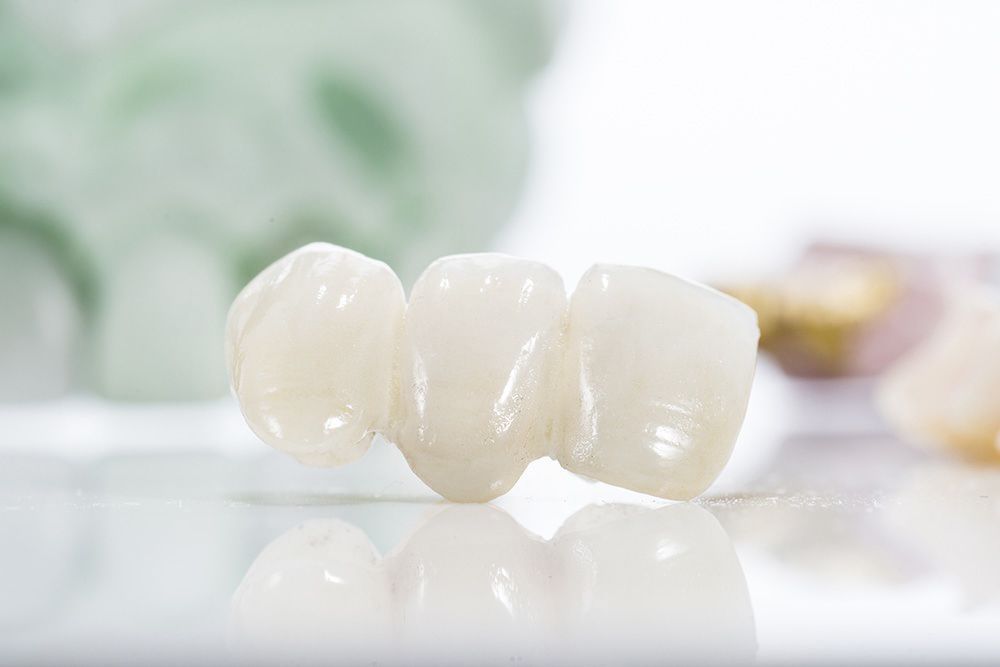
A crown is a custom cap that covers the whole visible part of a tooth, restoring its shape and, critically, holding a weakened tooth together so it does not split. A bridge is a set of joined crowns: crowns on the teeth either side of a gap, carrying a replacement tooth suspended between them. Crowns and bridges are made from the same materials in the same laboratory, which is why they are almost always discussed together.
- Crown. One damaged tooth, still present, needing full coverage and protection.
- Bridge. One or more missing teeth, with healthy neighbours strong enough to carry the load.
- Onlay. A partial-coverage restoration when only part of the tooth needs rebuilding.
- Implant. A replacement root placed in the bone, which leaves the neighbouring teeth untouched.
- Denture. A removable option, usually where several teeth are missing.
When a crown is the right choice
- After root canal treatment, because a root-treated back tooth is brittle and very likely to fracture without full coverage
- A tooth with a large old filling where more filling material remains than natural tooth
- A cracked tooth that hurts on biting, where a crown holds the segments together
- A tooth broken below the level a filling can rebuild predictably
- Severe wear from grinding, which often needs a night guard afterwards to protect the work
- A discoloured or malformed front tooth where veneers would not provide enough strength
The judgement call is usually between a large filling and one of the crowns and bridges options. A filling is cheaper and preserves more tooth, but if it fails and the tooth splits, you may lose the tooth entirely. That risk is the reason crowns and bridges exist.
When a bridge makes sense
Of the two, a bridge is the option that suits a gap bounded by teeth that are healthy and strong, particularly if those neighbouring teeth already need crowns for their own reasons. It is fixed in place, feels natural to bite on, and can usually be completed within a few weeks.
- Best case. A single missing tooth with sound neighbours that already need crowning anyway.
- Reasonable case. A short gap where surgery is not an option for medical reasons or by preference.
- Poor case. Long gaps, or neighbouring teeth that are heavily filled, mobile or gum-compromised.
- Not suitable. A gap with no tooth on one side, which needs an implant or a removable option instead.
The honest trade-off with crowns and bridges used to close a gap is that healthy enamel has to be removed from two teeth to replace one. An implant avoids that entirely but requires surgery, a longer timeline and usually a higher fee. Neither is universally better, and a proper discussion should cover both.
What the appointments involve
- Assessment. Examination and digital X-rays to check the root, the bone and whether the tooth can support a restoration at all.
- Preparation. Under local anaesthetic, the tooth is reshaped to make room for the crown. For a bridge, both anchor teeth are prepared at the same visit.
- Impression or scan. A digital scan or physical impression is taken, along with records of your bite and shade matching for the colour.
- Temporary restoration. A temporary crown or bridge protects the teeth while the laboratory work is made. Avoid very sticky food and floss carefully around it.
- Fitting. Usually two to three weeks later. Fit, bite and appearance are checked before anything is cemented permanently.
- Review. A short check that the bite has settled and the gum around the margin is healthy.
Some crowns and bridges can be milled in a single visit where the practice has the equipment, which removes the temporary stage. Ask whether that applies to your case. If you are anxious about longer appointments, sedation options are available.
Materials used for crowns and bridges
- Zirconia. Very strong and metal-free, the usual choice for back teeth and for patients who grind.
- Layered zirconia or porcelain. Better translucency for front teeth, with strength close to solid zirconia.
- Lithium disilicate. Excellent appearance, well suited to single front crowns and premolars.
- Porcelain fused to metal. A long-established option, though a fine dark line can show at the gum over time.
- Gold alloy. Extremely durable and kind to the opposing tooth, still an excellent clinical choice where appearance allows.
Material selection for crowns and bridges depends on where the tooth sits, how hard you bite, how much space is available and how visible it is. A front tooth beside natural enamel is the hardest thing in dentistry to match, and it is worth allowing the extra appointment time to get the shade right.
How long do crowns and bridges last?
Studies and clinical experience point the same way on how long crowns and bridges last: most well-made restorations last somewhere between ten and twenty years, and many last longer. Failure is rarely the porcelain breaking. It is almost always decay at the margin where the crown meets the tooth, or gum disease undermining the support.
- Clean the margin thoroughly, because that junction is where decay starts
- Floss under a bridge daily with superfloss or an interdental brush, which is non-negotiable
- Wear a night guard if you grind, since clenching is the fastest way to fracture ceramic
- Keep regular hygiene appointments so early problems at the margin are caught
- Avoid chewing ice, pen lids and hard nut shells
- Report any looseness, odour or sensitivity promptly rather than waiting
A crown that comes loose is not automatically lost. If it is recemented quickly the tooth is usually fine, but a tooth left uncovered can shift, decay or fracture within weeks. Our guide on what to do about a chipped or broken tooth covers the immediate steps, and emergency dental care is available if a restoration fails suddenly.
What crowns and bridges cost in Ontario
Crowns and bridges are normally quoted as one fee per unit, so a single crown includes that includes preparation, the laboratory work and fitting, with X-rays and any core build-up billed separately. A three-unit bridge is roughly the cost of three crowns, because that is essentially what it is. Root canal treatment, if needed first, is a separate procedure.
Most insurance plans cover a share of major restorative work, often around half, subject to an annual maximum and sometimes a waiting period. Ask for a written treatment plan with procedure codes so you can submit a predetermination to your insurer before starting. Payment arrangements can usually be discussed when you book an appointment.
One comparison worth making honestly: a bridge is often cheaper up front than an implant, but it involves preparing two healthy teeth and will likely need replacing at some point, along with everything attached to it. Over thirty years the arithmetic can reverse. Ask for both plans in writing.
Alternatives to consider first
- A large filling or onlay. Where enough sound tooth remains, this preserves more of your own structure.
- An implant. Replaces a single missing tooth without touching the neighbours, though it needs surgery and healing time.
- A removable partial denture. Lower cost and useful for multiple gaps, but less comfortable than fixed work.
- Doing nothing, temporarily. Occasionally reasonable for a small back gap, provided you accept that neighbouring teeth tend to tip and drift.
- Orthodontics. Sometimes aligners can close a small space without any restoration at all.
Guidance from the Ontario Dental Association encourages patients to ask about alternatives, risks and costs before agreeing to treatment. With crowns and bridges that conversation matters, because the tooth preparation is irreversible.
Crowns and bridges: frequently asked questions
Does getting a crown hurt?
The preparation is done under local anaesthetic, so the appointment itself should not be painful. Mild sensitivity or tenderness for a few days afterwards is normal, particularly if the tooth still has a live nerve.
How long does treatment take from start to finish?
Usually two appointments about two to three weeks apart, with a temporary restoration in between. Some practices can mill a crown in a single visit. A bridge follows the same sequence but takes slightly longer at each stage.
Will a crown look like my natural tooth?
A well-made ceramic crown is difficult to distinguish from natural enamel. Front teeth are the hardest to match because enamel is translucent, so expect extra time on shade selection and be willing to ask for an adjustment before it is cemented.
Can I get a bridge if a tooth is missing at the very back?
Generally no, because a bridge needs support at both ends. A gap with no tooth behind it usually calls for an implant or a removable partial denture instead. An examination and X-rays will confirm what is possible.
How do I clean under a bridge?
With superfloss, an interdental brush or a water flosser, every day. The space under the replacement tooth traps plaque, and neglecting it is one of the main reasons bridges fail through decay or gum disease at the anchor teeth.
Are crowns and bridges covered by insurance?
Most plans cover a percentage of major restorative work, commonly around half, subject to an annual maximum. Ask for a written plan with procedure codes and submit it for a predetermination so you know your share before treatment begins.
Restore a damaged tooth in London, Ontario
A tooth that is cracked, heavily filled or missing will not improve on its own, and the options narrow the longer it waits. Call (519) 679-0808, use the contact page, or book an appointment at our Richmond Street clinic. You can read about Hyland Dental Centre, browse the full range of dental services in London, Ontario, or see how crowns and bridges are planned and fitted here. Ask for the alternatives in writing, including cost and expected lifespan, before you decide.
This article is general information for patients in London, Ontario and is not a diagnosis or a treatment recommendation. Whether a crown, bridge, implant or filling is appropriate can only be determined by a dentist after an examination and X-rays.