
Dentures replace missing teeth to restore chewing, speech and appearance. Modern options range from a simple partial filling one or two gaps through to implant-supported overdentures that clip firmly into place, and the right choice depends on how many teeth remain and the condition of the underlying bone.
Choosing a dentures clinic in London, Ontario is mostly about fit and follow-up. Our dentures clinic makes complete, partial and implant-retained dentures on site, and we ease and reline them as your mouth changes.
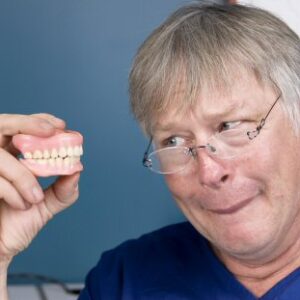
Dentures – Restore Your Complete Smile
At Hyland Dental, our dentists take a personalized approach to dental care. We craft dentures designed exactly to fit with your gums, remaining healthy teeth, facial features and lifestyle, whether you’re missing a few teeth or an entire row.
As replacements for your natural teeth, dentures and implants have both aesthetic and structural functions — the appearance of a full, healthy smile, and the functions of biting and chewing to digest essential nutrients, and supporting your mouth, cheeks and lips that are only possible with a complete set of teeth. Find your smile with the right set of dentures or implant:
Conventional Dentures
Conventional dentures fill in the spaces created by missing teeth, while also preventing other teeth from shifting. Conventional dentures is made after the damaged teeth are removed and the gum tissue has healed. This usually takes four to six weeks, the jaw will readjust and gums will shrink due to bone rearrangement.
To start the process, your mouth will be evaluated for the denture fabrication. Pending oral health, we will confirm we can proceed by taking moulds of the mouth and determining its shape, so the dentures fit properly.
Immediate Dentures
The right set of dentures are custom-fitted to your mouth and oral structures. Getting the perfect fit doesn’t happen right away — it takes time to craft the right set after the damaged teeth are extracted and your mouth heals. In the meantime, we can provide you with immediate dentures to wear right away.
Immediate dentures will need to be adjusted once your mouth has completely healed. You can also wear them as a temporary set to restore your normal lifestyle habits and oral functions right away, and minimize disruptions and discomfort.
Are you getting fitted for dentures or an implant? Our dentists walk you through every step to ensure you are comfortable throughout the procedure, and get the best results. See how dentures or an implant transforms your smile:
- Tooth Extraction: Once diagnosed with severe tooth decay or infection, our dentists perform a tooth extraction to cure the damage and prevent worsening.
- Find the Right Replacement: Our dentists inform you of your options for missing teeth replacement. We recommend conventional dentures, immediate dentures, implant-supported dentures, or single tooth implants, based on your oral health and needs.
- Crafting: Your dentures or implant are made using a hard resin or porcelain which match the strength, integrity, and appearance of your natural teeth.
- Replacement Teeth Care: Restore your healthy smile and normal oral functions, and care for your dentures or implant with good oral hygiene, regular check-ups, and fittings to ensure that they maintain their appearance and function over the years.
Book Your consultation & Restore Your Complete Smile
At Hyland Dental, we believe in second chances. You deserve to smile confidently again, and eat and talk normally. A tooth extraction eliminates the extent of decay and infection; you should not have to pay the price with missing teeth. With dentures, you never have to miss out on everything strong teeth and a beautiful smile allow you to do.
Our dentists craft dentures customized to fit in the gaps left by your missing teeth and support the remaining oral structures. We craft and fit conventional dentures, immediate dentures, and implant-supported dentures based on the extent of the loss and your long-term dental care. With the right set of dentures, we can help you bite, chew, talk normally — and smile confidently again.
Are you struggling with missing teeth? Book a consultation at Hyland Dental. We do not believe in a one-size-fits-all approach. Our dentists will customize a set of dentures that let you eat, talk, and smile normally and confidently.
What to Expect From a Dentures Clinic in London
Dentures have changed more in the last decade than most people realise. A modern dentures clinic in London will offer several options, not one.
Complete and partial
Complete dentures replace a full arch. Partials fill gaps while clipping to remaining teeth, and they also stop those teeth drifting. Both are made from impressions or a digital scan, then tried in before finishing.
Implant-retained options
Two to four implants can anchor a lower denture that would otherwise float. For many patients this is the single biggest improvement available, particularly for eating.
The settling-in period
Expect two to six weeks of adjustment and a couple of easing appointments. Sore spots are normal and fixable; a denture that has never been eased is usually a denture that is not being worn.
Care and review
Clean daily with a brush and denture cleaner, never boiling water, and leave them out overnight. Annual review matters because the ridge underneath keeps changing shape, and a relined denture fits better than a loose one propped up with adhesive. The Canadian Dental Association has a good primer, and fees follow the Ontario Dental Association guide.
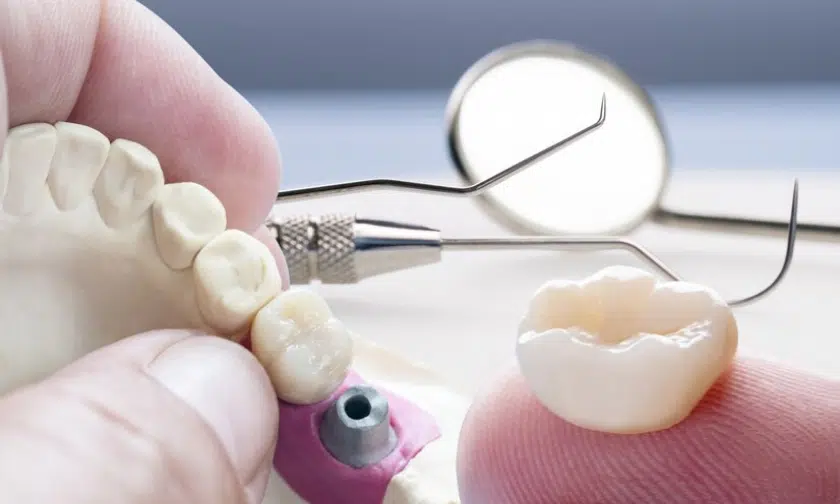
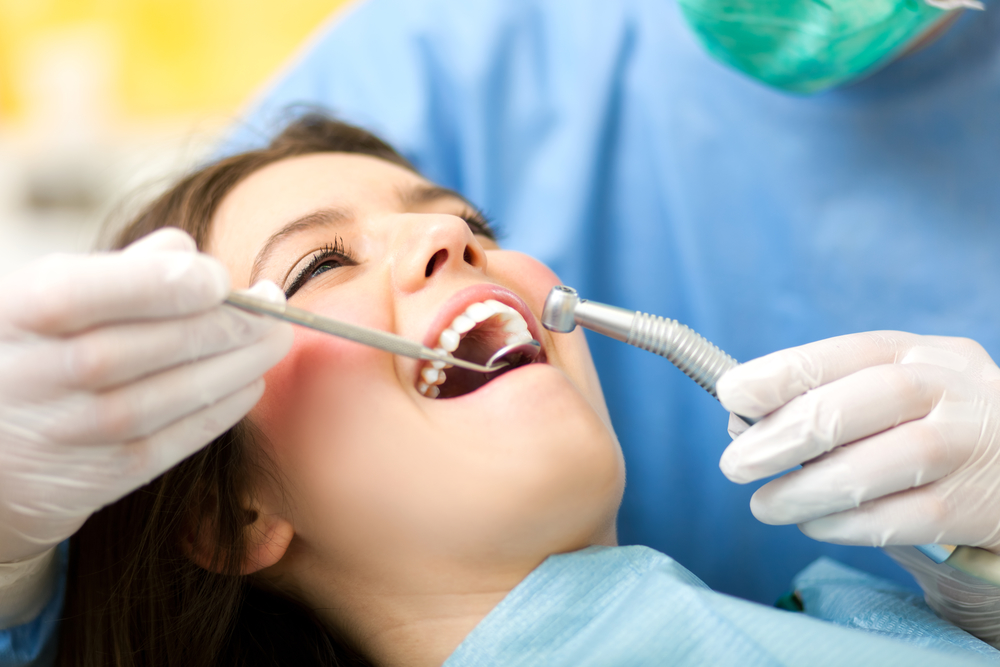
Types of Dentures and How They Differ
All prosthetic work is provided under standards maintained by the Royal College of Dental Surgeons of Ontario.
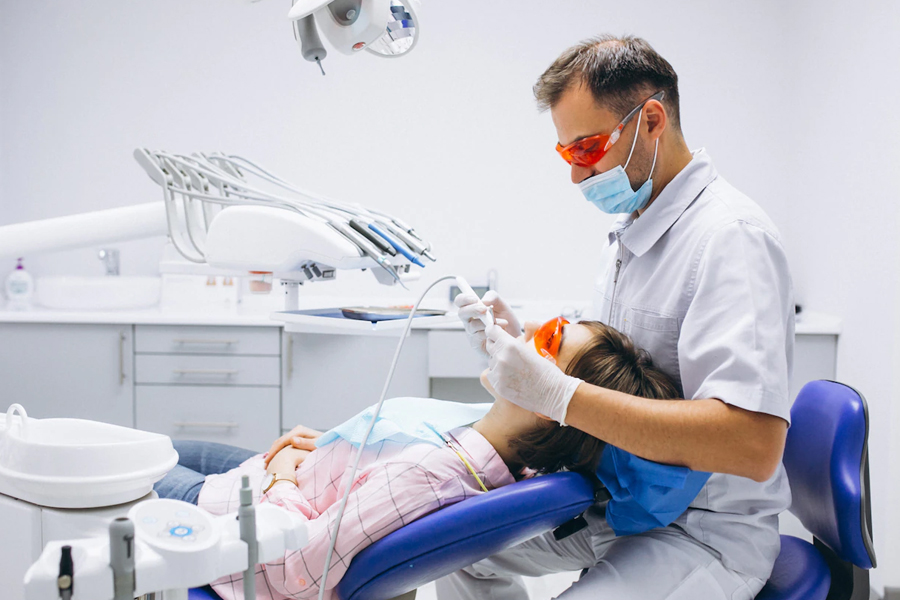
Complete dentures
Used when all teeth in an arch are missing. An upper complete denture is usually retained by suction across the palate and is generally well tolerated. A lower complete denture has far less surface area and no palate to grip, which is why lower dentures are the most common source of frustration — and why implant support makes such a difference there.
Partial dentures
Used where some natural teeth remain, resting on the gums and clasping onto existing teeth. Metal-framework partials are thinner, stronger and more comfortable than all-acrylic versions, though acrylic is often used as an interim measure while healing occurs. Partial dentures also stop remaining teeth drifting into gaps.
Immediate and transitional dentures
Fitted straight after extractions so you are not without teeth. Because gums shrink as they heal, these need relining or replacing after several months — that is expected, not a failure.

Implant-supported options
Two or more implants can anchor an overdenture that clips into place, transforming stability for lower dentures in particular. It costs more and requires adequate bone, but for anyone struggling with a loose lower denture it is usually the single most effective improvement available.
The fitting process
Expect several appointments: impressions, a try-in stage in wax where shape, shade and bite are checked and adjusted, then fitting, then review visits for adjustment. The try-in stage matters — it is far easier to change the appearance of dentures in wax than after processing, so speak up then.
The adjustment period, honestly
New dentures feel bulky, saliva flow increases, and speech takes practice. Sore spots are normal in the first weeks and are easily relieved by small adjustments, so do not endure them — and do not adjust them yourself. Start with soft foods cut small, chew on both sides at once, and expect several weeks before eating feels natural. Learning to manage lower dentures takes longer than upper.
Care, and why review visits still matter
Clean dentures over a bowl of water with a brush and soap rather than toothpaste, which is abrasive. Leave them out overnight in water or a cleaning solution to let the tissues recover. Brush your gums and any remaining teeth as normal. Jawbone continues to change shape after tooth loss, so dentures need relining periodically and replacing eventually. Annual examinations also continue to include oral cancer screening, which matters regardless of how many natural teeth you have. Fees reference the Ontario Dental Association guide; check the Canadian Dental Care Plan and see the Canadian Dental Association denture guide. Book an appointment to discuss options.