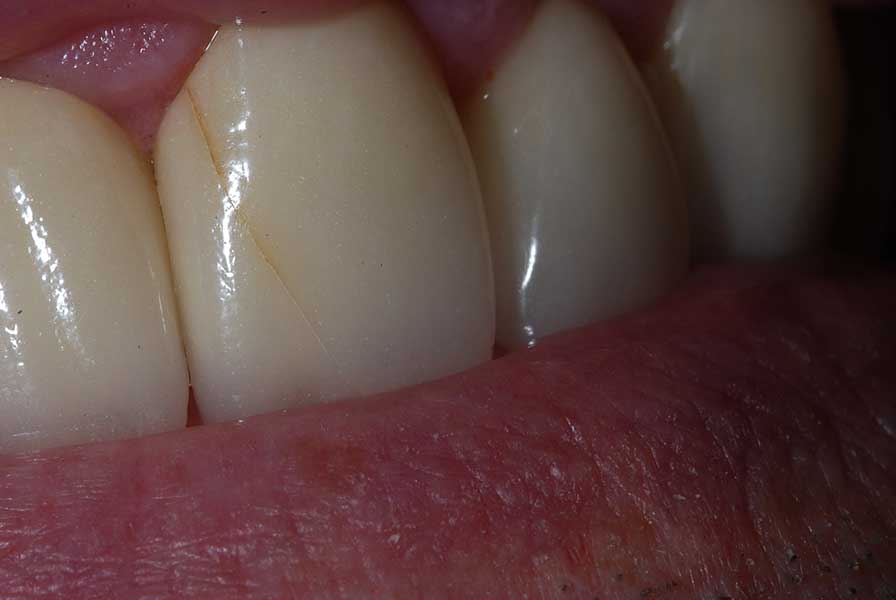
A root canal treats infection inside a tooth so the tooth can be kept rather than removed. Despite its reputation, modern root canal treatment is usually no more uncomfortable than having a filling, and it is the difference between saving a tooth and losing it.

Root Canal Treatments – Endodontic Dentistry
Infections can cause lasting damage to teeth. When left untreated, you risk losing teeth that could have been saved and restored to optimal health. Hyland Dental offers root canal treatment to save teeth damaged by infection.
Severe cavities and tooth decay, infections, and broken teeth can be saved by root canal therapy. A root canal treatment offers the best-case scenario: keep your natural teeth following treatment of the infection or severe damage. Talk to our dentists today about saving your infected or decayed teeth.
Root Canal Treatment at Hyland Dental
We Save Your Natural Smile
Are you suffering from tooth decay, infection, or a broken tooth? Are you dreading your options, such as a tooth extraction? At Hyland Dental, we do our best to preserve your natural teeth — and save your smile.
Our dentists offer root canal therapy for rehabilitating infected, decayed, and broken teeth. With a root canal treatment, we can preserve the integrity of a natural tooth, restoring it to optimal health. We help you avoid losing your teeth, saving these from extraction, and offering the best dental care to maintain them for years.
Call Hyland Dental to learn about root canal treatments and preserving your natural teeth for years.
Book Your Root Canal Treatment
An oral infection has devastating effects on long-term oral health. What starts as cavities can progress to severe tooth decay and infection. Without adequate prevention — like good oral hygiene habits — and fast treatment, even surrounding healthy teeth can become infected and irreversibly damaged.
Don’t wait for an infection to worsen. Our dentists at Hyland Dental are here to help. If you experience any of the symptoms of an infection, ask us about your treatment options.
We recommend a root canal to avoid the need for tooth extraction, and restore the appearance and function of your natural teeth.
Book a consultation at Hyland Dental. Visit our conveniently located clinic in London, and trust our dentists’ extensive training, and commitment to patient care and providing the best outcome possible.
Root Canal Treatment: What It Is and Why It Is Needed
Inside every tooth is a chamber containing nerve and blood vessels. When decay, a deep filling, a crack or trauma allows bacteria in, that tissue becomes irreversibly inflamed or dies. A root canal removes it, disinfects the canal system and seals it, treatment carried out under standards set by the Royal College of Dental Surgeons of Ontario.
Signs you may need one
Persistent throbbing pain, pain that wakes you at night, lingering sensitivity to hot or cold that continues after the stimulus is removed, tenderness on biting, a tooth that has darkened, or a swelling on the gum nearby. Sometimes there are no symptoms at all and the problem is found on a radiograph — a dead nerve does not always hurt.
What the appointment involves
The tooth is thoroughly numbed and isolated with a small rubber sheet to keep it clean and dry. An opening is made through the biting surface, the canal system is cleaned with fine instruments and disinfecting solutions, and its length is measured electronically for accuracy. The canals are then filled with a sealing material and the opening restored. Straightforward cases are often completed in one visit; complex or infected teeth may need two.
Does it hurt?
This is the most common question, and the honest answer is that the treatment relieves pain rather than causing it. The severe ache people associate with root canals comes from the infection beforehand. With modern anaesthesia the procedure itself is comparable to a large filling. Mild tenderness for a few days afterwards is normal and settles with ordinary painkillers.
Why a crown usually follows
A tooth that has had a root canal has lost internal structure and is more brittle, particularly molars that take heavy chewing forces. A crown distributes those forces and substantially reduces the risk of fracture. Skipping it is the most common reason root canal treatment fails years later.
Alternatives, honestly
The realistic alternative is extraction, followed by an implant, bridge or denture if you want the gap filled. Extraction is quicker and often cheaper initially, but replacing a tooth generally costs more than keeping it. Antibiotics alone cannot resolve the problem, because they do not reach the dead tissue inside the tooth. Doing nothing risks the infection spreading.
Success rates and aftercare
Root canal treatment has a high success rate when the canals are cleaned thoroughly and the tooth is properly restored afterwards. Avoid chewing hard on the tooth until the permanent restoration is placed, and keep up normal brushing and interdental cleaning — a treated tooth can still develop decay elsewhere.
Costs and coverage
Fees reference the Ontario Dental Association suggested guide and vary with the number of canals, so a molar costs more than an incisor. Ask for a written estimate with procedure codes and request a predetermination from your insurer. Uninsured households should check the Canadian Dental Care Plan. The Canadian Dental Association has further patient information. If you have persistent toothache, see our emergency dental page or book an appointment.