
Dental implants replace the root of a missing tooth, not just the visible part, which is why they preserve bone in a way bridges and dentures cannot. Here is how dental implants work at our London, Ontario clinic, who they suit, and what the timeline looks like.
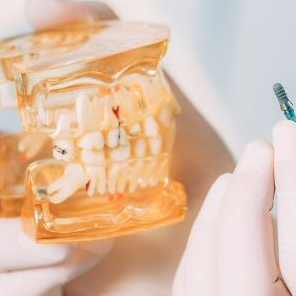
Dental Implant – Restore Your Complete Smile
At Hyland Dental, our dentists take a personalized approach to dental care. We craft dentures designed exactly to fit with your gums, remaining healthy teeth, facial features and lifestyle, whether you’re missing a few teeth or an entire row.
As replacements for your natural teeth, dentures and dental implants have both aesthetic and structural functions — the appearance of a full, healthy smile, and the functions of biting and chewing to digest essential nutrients, and supporting your mouth, cheeks and lips that are only possible with a complete set of teeth. Find your smile with the right set of dentures or dental implant:
Implant-Supported Dentures
The latest innovation in dentures, implant-supported dentures don’t sit on top of your gums, but are anchored in place to your jaw using titanium implants. Thanks to their strength, these dentures can help replace several missing teeth. You need at least two implants for support to anchor your dentures.
Implant-supported dentures consist of a titanium post and crowns that look just like your natural teeth, and are strong enough to let you enjoy all your favourite foods — even those that require a lot of chewing. Ask our dentists if you are a good candidate.
Single Tooth Implants
Severe tooth decay and infections often culminate in losing one or several affected teeth. And while the cause of damage is severed at the root, we know how patients struggle with smiling again. Our dentists can place one or several dental implants to replace missing teeth, and restore optimal oral functions and appearance.
Dental implants are made of titanium roots placed in the missing teeth’s bone sockets. Titanium is a very strong material capable of supporting the crown and anchoring new artificial teeth, such as dentures, crowns, and bridges, securely on the jawbone as it heals. The latest in cosmetic dentistry, implants provide you with a new set of stronger, better teeth, and a confidence boost with your brighter smile.
Are you getting fitted for dentures or an implant? Our dentists walk you through every step to ensure you are comfortable throughout the procedure, and get the best results. See how dentures or an implant transforms your smile:
- Tooth Extraction: Once diagnosed with severe tooth decay or infection, our dentists perform a tooth extraction to cure the damage and prevent worsening.
- Find the Right Replacement: Our dentists inform you of your options for missing teeth replacement. We recommend conventional dentures, immediate dentures, implant-supported dentures, or single tooth implants, based on your oral health and needs.
- Crafting: Your dentures or implant are made using a hard resin or porcelain which match the strength, integrity, and appearance of your natural teeth.
- Replacement Teeth Care: Restore your healthy smile and normal oral functions, and care for your dentures or implant with good oral hygiene, regular check-ups, and fittings to ensure that they maintain their appearance and function over the years.
Book Your consultation & Restore Your Complete Smile
At Hyland Dental, we believe in second chances. You deserve to smile confidently again, and eat and talk normally. A tooth extraction eliminates the extent of decay and infection; you should not have to pay the price with missing teeth. With dentures, you never have to miss out on everything strong teeth and a beautiful smile allow you to do.
Our dentists craft dentures customized to fit in the gaps left by your missing teeth and support the remaining oral structures. We craft and fit conventional dentures, immediate dentures, and implant-supported dentures based on the extent of the loss and your long-term dental care. With the right set of dentures, we can help you bite, chew, talk normally — and smile confidently again.
Are you struggling with missing teeth? Book a consultation at Hyland Dental. We do not believe in a one-size-fits-all approach. Our dentists will customize a set of dentures that let you eat, talk, and smile normally and confidently.
Dental Implants in London: Timeline, Suitability and Cost
An implant is a titanium root placed into the jaw, left to integrate, then restored with a crown. It is the closest thing dentistry has to replacing a tooth rather than patching the gap.
How long it takes
Placement is usually under an hour with local anaesthetic. Integration takes three to six months, during which a temporary tooth can be worn. Dental implants in London are then restored with a custom crown.
Who is suitable
Adequate bone volume and healthy gums matter more than age. Smoking and uncontrolled diabetes both reduce success rates. Where bone has been lost after a long-standing extraction, grafting may be needed first.
Implant or bridge
A bridge is quicker and cheaper but requires cutting the neighbouring teeth. An implant leaves them untouched and preserves bone. Over twenty years the implant usually wins on cost per year.
Maintenance
Implants do not decay, but they do get gum disease around them. Daily interdental cleaning and regular hygiene visits are what make them last. Background reading from the Canadian Dental Association.

What determines whether dental implants will work
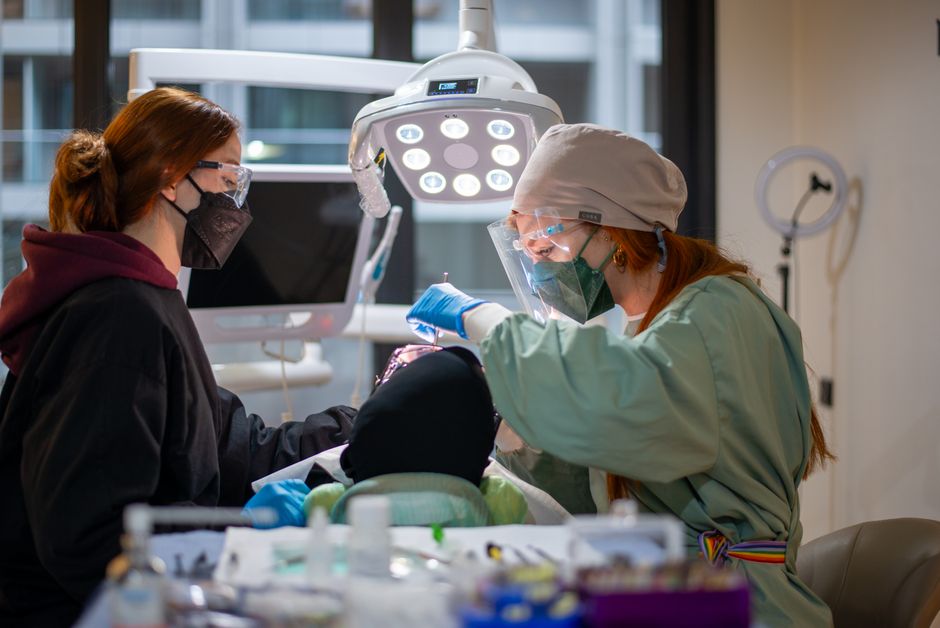
Dental implants succeed or fail on three things: enough bone to hold the fixture, healthy gums around it, and a patient who cleans it properly. Bone volume is assessed from three-dimensional imaging, and where it is thin, grafting is done first rather than compromising the position of the implant. Smoking and uncontrolled diabetes both raise failure rates significantly, and untreated gum disease must be stabilised before surgery.
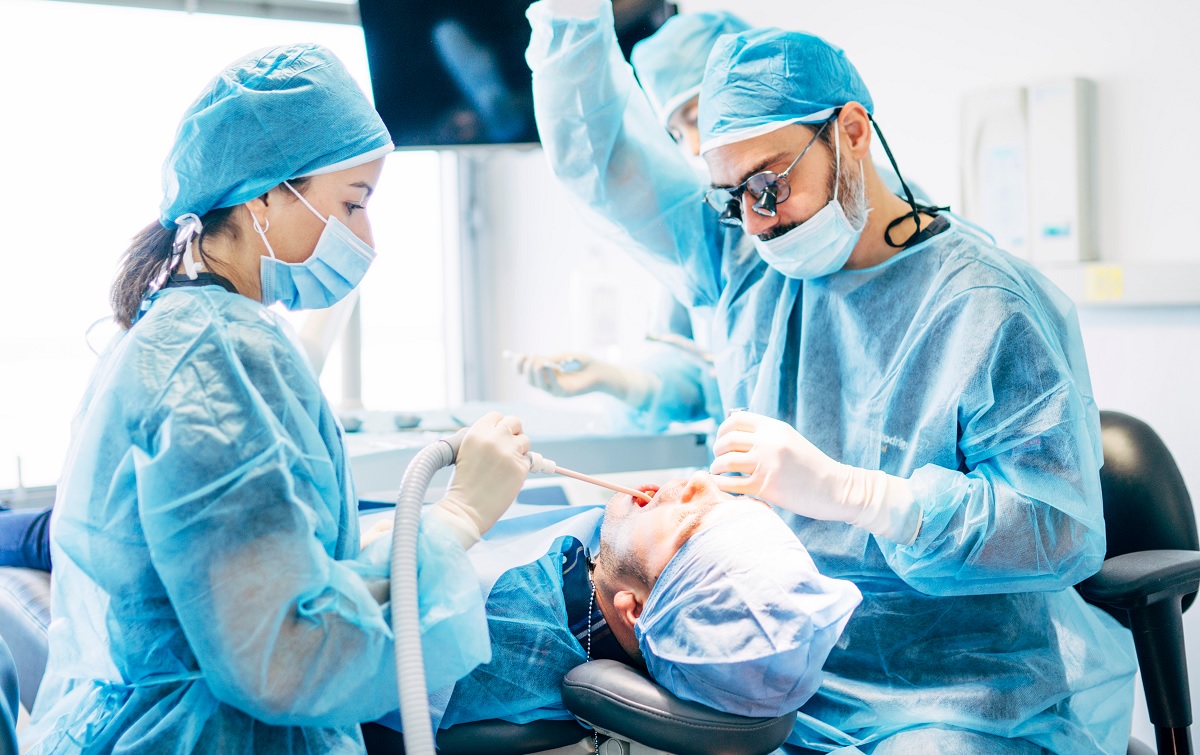
The sequence usually runs: assessment and imaging, placement, three to six months of healing while bone integrates with the fixture, then the abutment and crown. Dental implants need cleaning around the neck of the fixture for life; neglected implants develop peri-implantitis and can be lost years later. Ongoing hygiene appointments are part of the treatment, not an optional extra.