
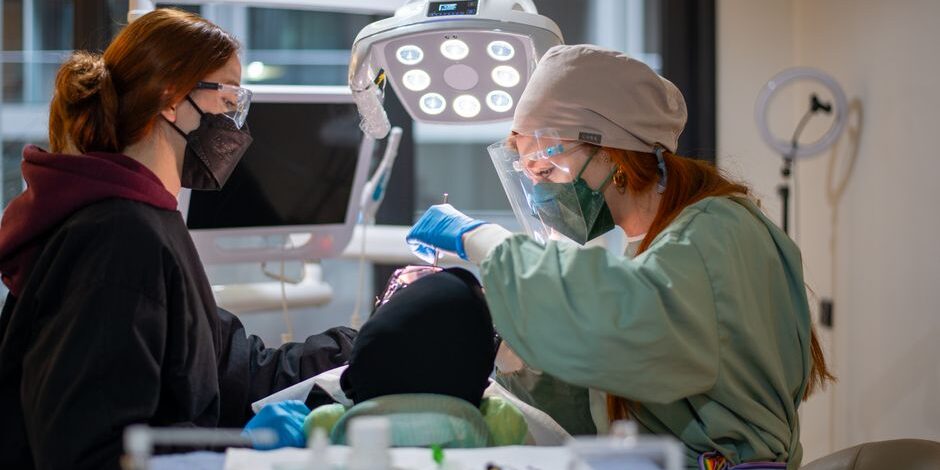
Most toothaches are urgent but not dangerous. A dental infection that has started to cause facial swelling belongs in a different category, because the swelling shows the bacteria are no longer contained inside the tooth. That is the point at which time stops being a matter of comfort and becomes a matter of safety, and it is why emergency dentists in London treat swelling as a same-day problem rather than a next-week one.
Hyland Dental Centre keeps time available for urgent problems. If you have swelling with dental pain, call (519) 679-0808 straight away or see how emergency dental care in London, Ontario is handled.
Why a dental infection spreads the way it does
A tooth is not a sealed unit. Once decay, a crack or a failing filling lets bacteria reach the pulp, the nerve tissue dies and the infection travels down the root canal system and out through the tip of the root into the surrounding bone. There is no blood supply left inside the tooth to fight it, which is why the body cannot clear a dental infection on its own and why antibiotics alone rarely finish the job.
From the bone, a dental infection follows the path of least resistance through soft tissue planes in the face and neck. That is what produces visible swelling, and it explains why the swelling can appear to move: under the eye, along the jawline, or down toward the throat depending on which tooth is involved.
- Localised gum swelling. A tender bump beside the tooth, often draining a bad taste. Urgent, usually manageable.
- Cheek or jaw swelling. The face is visibly asymmetrical. Needs same-day assessment.
- Swelling toward the eye. Infection tracking upward from an upper tooth. Emergency.
- Swelling under the jaw or into the neck. Can compromise the airway. Hospital, immediately.
- Swelling with fever or feeling unwell. The infection is systemic. Same day at minimum.
- Swelling with difficulty swallowing or breathing. Call emergency services.
Red flags that mean hospital, not a dental appointment
This is the shortest and most important list here, because a dental infection in the face can escalate quickly. Go to an emergency department or call 911 if a dental infection is accompanied by any of the following.
- Difficulty breathing, or a feeling that the throat is closing
- Difficulty swallowing your own saliva, or drooling
- Swelling under the tongue, or the tongue being pushed upward
- Swelling that has closed the eye or is spreading down the neck
- Inability to open the mouth more than a few millimetres
- Fever with chills, confusion, or a racing heartbeat
- Rapidly worsening swelling over a few hours
These are signs of a spreading infection that needs intravenous antibiotics and possibly surgical drainage in a hospital setting. Dental infections of this kind are uncommon, but they are the reason nobody in dentistry is casual about facial swelling.

What to do in the first hours
- Call a dentist immediately. Describe the swelling, where it is, how fast it appeared, and whether you have a fever. That determines how urgently you are seen.
- Do not apply heat. Warmth encourages a dental infection to spread through tissue. Use a cold compress on the outside of the face instead.
- Rinse with warm salt water. Half a teaspoon in a cup of water, gently, several times a day. This soothes tissue without forcing anything.
- Take pain relief as labelled. Follow the package directions and any advice from your pharmacist or physician. Do not place aspirin or clove oil on the gum.
- Do not squeeze or lance the swelling. Draining an abscess yourself pushes bacteria deeper into tissue.
- Stay upright and hydrated. Lying flat worsens throbbing, and dehydration makes fever harder to manage.
- Escalate if it changes. Any of the red flags above means hospital, regardless of what appointment you have booked.
If you are unsure whether what you have counts as urgent, our guide to what counts as a dental emergency sets out the thresholds, and dental abscess symptoms covers the earlier warning signs in detail.
How a dentist actually treats a dental infection
The way a dental infection is treated is simple in principle and worth understanding, because it explains why a prescription on its own is not a cure. Antibiotics travel in the bloodstream, and the inside of an infected tooth has no functioning blood supply. The drug reaches the surrounding tissue but not the reservoir of bacteria in the canal. The source has to be physically removed or drained.
- Examination and X-ray. Identifying which tooth is responsible, and how far the infection has spread into the bone.
- Drainage. Releasing pressure through the tooth or through a small incision in the gum. This usually produces immediate relief.
- Removing the source. Either root canal treatment to clean out the canal system and save the tooth, or extraction if the tooth is not restorable.
- Antibiotics where indicated. Prescribed as support when there is spreading swelling, fever or systemic involvement, not as a substitute for treatment.
- Rebuilding the tooth. A root-treated tooth is brittle and normally needs a crown to survive long term.
- Follow-up. Confirming the swelling has resolved and the bone is healing, which takes weeks rather than days.
Our guide to what to expect from root canal treatment walks through that appointment in detail. If anxiety is what has kept you from calling about a dental infection, sedation dentistry makes urgent treatment manageable, and it is worth mentioning when you book rather than on the day.
Why waiting makes everything worse
- The tooth becomes harder to save. A dental infection caught early is often a straightforward root canal. Left for weeks, the bone loss around the root can make extraction the only option.
- Swelling limits treatment. A face that is very swollen and a jaw that will not open make it harder to anaesthetise and treat the tooth on the day.
- Antibiotic resistance. Repeated courses that never address the source select for resistant bacteria and buy less time each round.
- Cost multiplies. Drainage and a root canal cost far less than extraction followed by a dental implant or a denture.
- Systemic risk. Spreading infections of the head and neck are a genuine medical emergency, and the risk rises the longer they are ignored.
- Pain gets less predictable. Sudden relief often means the abscess has burst, not that the infection has resolved.
That last point about a dental infection catches people out constantly. When the pressure releases, the pain drops sharply and it feels like the problem has passed. The bacteria are still there. Our article on toothache at night and when to call an emergency dentist covers the same trap.
What causes a dental infection in the first place
- Untreated decay that reaches the pulp, by far the most common cause
- A cracked or fractured tooth letting bacteria past the enamel
- A large or failing filling with leakage underneath it
- Advanced gum disease creating deep pockets around the root
- Trauma to a tooth, sometimes years before the infection appears
- A previous root canal that has not fully sealed the canal system
- A partially erupted wisdom tooth trapping bacteria under the gum
Prevention is unglamorous and effective: regular cleanings and examinations catch decay and cracks while they are still small, and a filling placed on time is what stops a cavity from ever reaching the nerve. Advice from the Canadian Dental Association on routine care is the practical baseline.
Dental infection and swelling: frequently asked questions
Can a dental infection go away on its own?
No. The pain may ease if an abscess drains, but the bacteria remain inside the tooth where the body cannot reach them. Without drainage, root canal treatment or extraction, the infection persists and tends to flare again.
How quickly can facial swelling become dangerous?
It can change within hours. Swelling that spreads under the jaw or toward the eye, or that comes with difficulty swallowing or breathing, is a medical emergency and needs a hospital rather than a dental appointment.
Will antibiotics alone cure a dental infection?
Rarely. Antibiotics can reduce swelling and control spread, which is valuable, but they cannot reach the dead tissue inside the tooth. The source still has to be treated, or the problem returns once the course finishes.
Should I use a heat pack on a swollen face?
No. Heat encourages a dental infection to spread through the soft tissues of the face. Use a cold compress on the outside of the cheek instead, and never apply heat to any facial swelling.
Why did my pain suddenly stop?
Usually because the abscess has burst and released pressure, or because the nerve has died completely. Neither means the infection has resolved. This is one of the most common reasons people delay treatment and end up losing the tooth.
Can I be seen the same day for swelling?
Swelling is treated as urgent, so call as early in the day as possible and say clearly that your face is swollen. Phone (519) 679-0808 and describe the location, how fast it appeared, and whether you have a fever.
Get a dental infection assessed today
Swelling is the point at which a dental problem stops being about discomfort. Call (519) 679-0808, use the contact page, or book an appointment at our Richmond Street clinic. You can read about Hyland Dental Centre, see the full list of dental services, or review how emergency dental care in London works. If the swelling involves your breathing, swallowing or vision, go to a hospital emergency department instead of waiting for a dental appointment.
This article is general information for patients in London, Ontario and is not a diagnosis. Facial swelling from a dental infection can become life-threatening. If you have difficulty breathing or swallowing, swelling under the tongue or into the neck, or a high fever, seek emergency medical care immediately.