
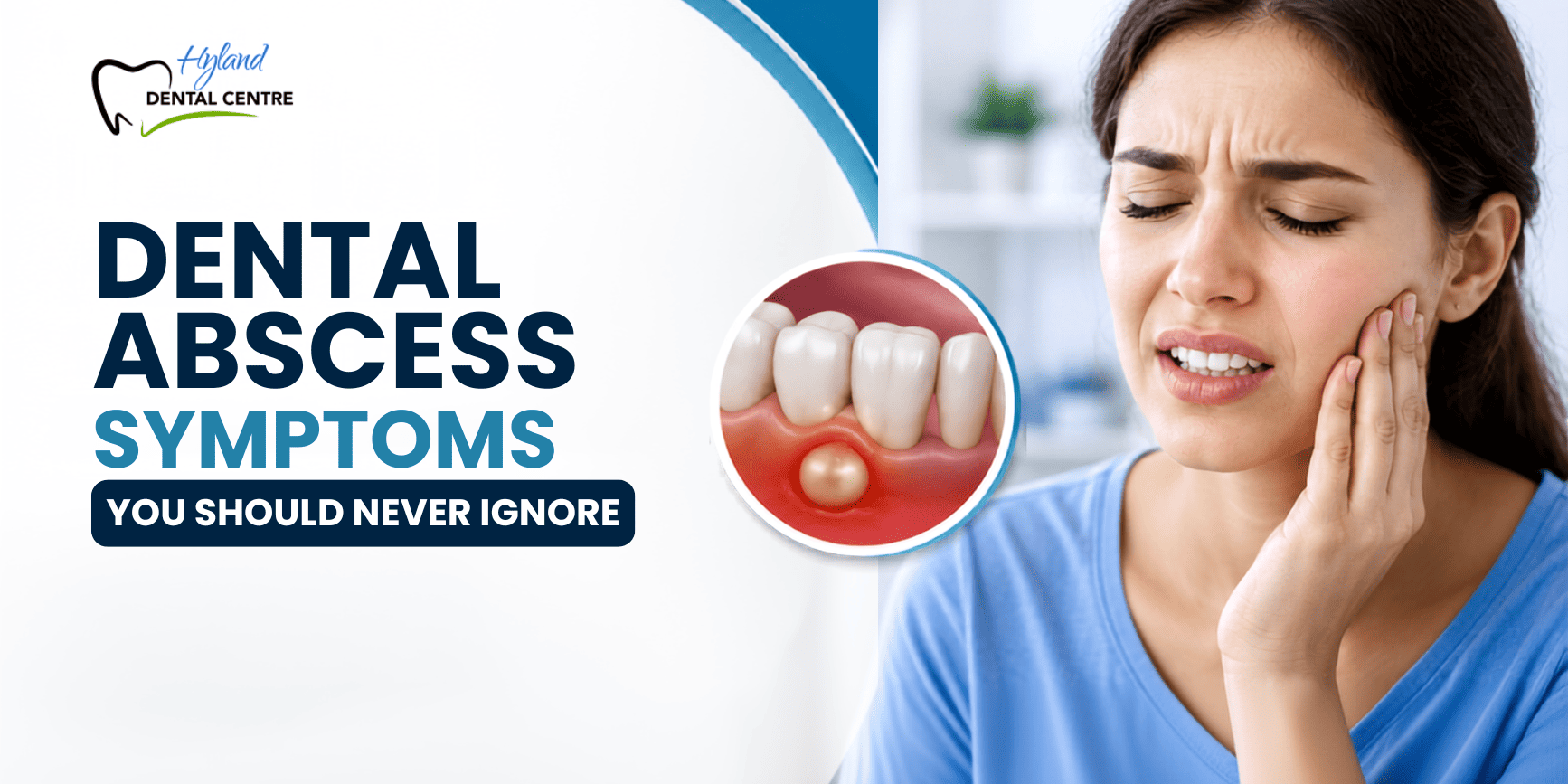
A dental abscess is a collection of pus caused by bacterial infection, either at the tip of a tooth root or in the gum beside it. Recognising the difference between one that needs an appointment this week and one that needs an emergency department tonight genuinely matters.
A toothache doesn’t always mean you have a cavity. In some cases, it may be a sign of a dental abscess or a bacterial infection that requires prompt treatment. While the pain may start around a single tooth, the infection can worsen over time and affect the surrounding gums, jaw, and even your overall health if left untreated.
At Hyland Dental Centre, we often see patients who hoped the pain would settle on its own or believed over-the-counter pain medication would solve the problem. Unfortunately, a dental abscess rarely goes away without professional care. Early diagnosis not only relieves discomfort but can also help prevent more extensive treatment later.
If you’re experiencing persistent tooth pain, swelling, or other unusual symptoms, don’t wait until the pain becomes unbearable. Seeing a dentist in London, Ontario as soon as possible can help identify the cause of the infection and protect your oral health.
What Is a Dental Abscess?
A dental abscess is a pocket of pus that forms when bacteria infect the inside of a tooth or the surrounding gum tissue. The infection is most commonly caused by untreated tooth decay, a cracked or broken tooth, advanced gum disease, or bacteria entering through damaged dental work.
As your body responds to the infection, pressure builds inside the affected area, leading to pain, swelling, and inflammation. In many cases, the discomfort becomes worse when chewing or biting, and the pain may spread to the jaw, ear, or side of the face.
Dentists generally diagnose three types of dental abscesses:
- Periapical abscess – develops at the tip of a tooth’s root, often after deep decay or trauma damages the tooth’s pulp.
- Periodontal abscess – forms in the gums and is commonly associated with gum disease.
- Gingival abscess – affects the gum tissue only, usually when bacteria become trapped around the gums.
Although each type develops differently, they all require professional treatment to remove the infection and prevent further complications.
Many people are surprised that a dental abscess doesn’t always begin with severe pain. At our dental clinic in London, Ontario, some patients first notice mild sensitivity, tenderness while chewing, or swelling around the gums before the pain becomes more intense. Recognizing these early warning signs can make treatment simpler and help preserve the affected tooth whenever possible.
Common Dental Abscess Symptoms
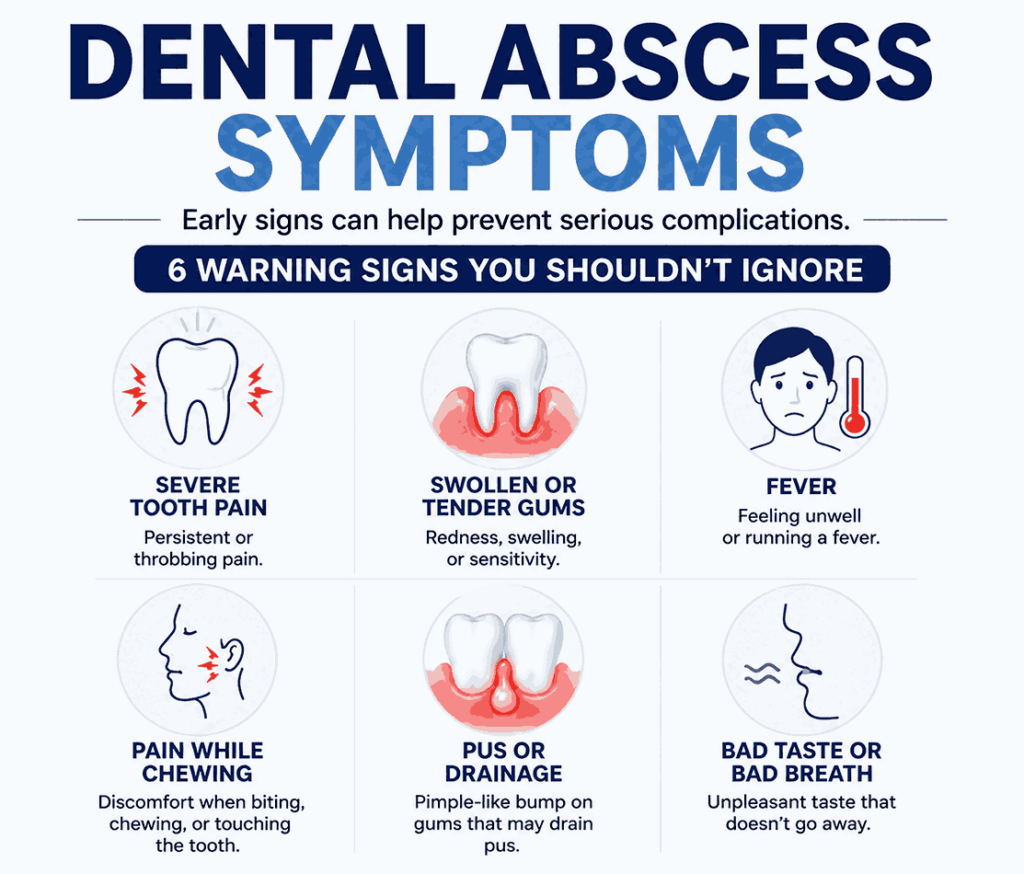
The symptoms of a dental abscess can vary depending on how advanced the infection is. Some infections develop quickly over a day or two, while others progress more gradually. Paying attention to changes in your mouth can help you seek treatment before the infection spreads.
Some of the most common dental abscess symptoms include:
- Persistent or throbbing tooth pain
- Swollen, red, or tender gums
- Pain when biting or chewing
- Sensitivity to hot or cold foods and drinks
- Swelling in the cheek, jaw, or face
- A pimple-like bump on the gums that may drain pus
- A bad taste in the mouth or persistent bad breath
- Fever or feeling generally unwell
- Swollen lymph nodes beneath the jaw or in the neck
It’s also important to remember that pain can temporarily decrease if the abscess begins to drain. While this may feel like the problem has improved, the infection is still present and requires professional treatment.
If you develop significant facial swelling, have difficulty swallowing, experience trouble breathing, or develop a fever alongside severe tooth pain, seek emergency medical care immediately. Once your condition has been assessed, arranging emergency dental in London can help address the source of the infection and reduce the risk of further complications.
Why early treatment matters
Dental infections rarely improve without treatment. The sooner a dentist identifies the source of the infection, the more treatment options are often available. Acting early may help preserve the affected tooth, reduce discomfort, and prevent the infection from spreading to nearby tissues.
If you’re unsure whether your symptoms require immediate attention, it’s always safer to have them evaluated by an experienced dental clinic in London rather than waiting for the pain to become more severe.
What Happens If a Dental Abscess Is Left Untreated?
A dental abscess is more than a painful toothache. Because it’s a bacterial infection, delaying treatment gives the infection more time to spread. While the pain may come and go, the underlying problem usually doesn’t resolve without professional dental care.
One of the biggest misconceptions we hear from patients is, “The pain stopped, so I thought it had healed.” In reality, a decrease in pain can simply mean the abscess has drained, reducing pressure around the tooth. The infection, however, is still present and can continue affecting the surrounding tissues.
Without treatment, a dental abscess may lead to:
- Damage to the affected tooth and surrounding bone
- Infection spreading into the gums or nearby teeth
- Tooth loss if the damage becomes too severe
- Increased pain and swelling that can affect eating and speaking
- In rare but serious cases, the infection spreading beyond the mouth
While serious complications aren’t common, they become more likely when symptoms are ignored for an extended period. That’s why it’s important not to wait until the pain becomes unbearable before seeking care.
If you’re experiencing persistent tooth pain, swelling, or signs of infection, visiting a dentist clinic, Ontario early can often make treatment more straightforward and improve the chances of saving the affected tooth.
Good to know: Antibiotics may help control the spread of infection in certain situations, but they don’t remove the source of the problem. In most cases, the infected tooth or gum still requires dental treatment.
How Is a Dental Abscess Treated?
The right treatment depends on where the infection started, how far it has progressed, and the overall health of the affected tooth.
When you visit our dental clinic in London, Ontario, the first step is a thorough examination. Your dentist will discuss your symptoms, examine the affected area, and may recommend digital X-rays to identify the exact source of the infection. This allows us to recommend treatment based on your specific condition rather than simply managing the pain.
Depending on the diagnosis, treatment may include:
Draining the Abscess
If pus has collected around the tooth or gums, draining the abscess helps reduce pressure, relieve pain, and remove infected material. This is often one of the first steps in controlling the infection.
Root Canal Treatment
When the infection has reached the inside of the tooth but the tooth can still be preserved, root canal treatment removes the infected tissue, disinfects the root canals, and seals the tooth to help prevent future infection.
Tooth Extraction
If the tooth is too severely damaged to save, removing it may be the healthiest option. Your dentist will explain why extraction is recommended and discuss suitable tooth replacement options if needed.
Antibiotics
Antibiotics are not required for every dental abscess. They may be prescribed if the infection has spread, facial swelling is present, or there are signs that the body’s immune system needs additional support. Your dentist will determine whether antibiotics are appropriate based on your symptoms and clinical findings.
The goal of treatment is not only to relieve pain but also to eliminate the infection and reduce the risk of it returning.
If you’re dealing with increasing swelling, severe discomfort, or signs of infection, don’t delay seeking emergency dentist in London. Early treatment can often prevent more extensive procedures and help protect your long-term oral health.
A Note for Patients
If you’re unsure whether your symptoms are serious enough to book an appointment, it’s always worth calling your dental office. A conversation with your dental team can help determine how urgently you should be seen and whether you require same-day care.
For patients experiencing severe swelling, uncontrolled bleeding, difficulty swallowing, or trouble breathing, seek immediate medical attention first. Once your condition is stable, an emergency dentist clinic in London, Ontario can provide the dental treatment needed to address the underlying infection.
Can You Prevent a Dental Abscess?
Not every dental abscess can be prevented, but many develop from oral health problems that are treatable in their early stages. Taking care of your teeth and addressing minor issues before they worsen can significantly reduce your risk of developing an infection.
Here are a few simple ways to help protect your oral health:
- Brush your teeth twice a day with fluoride toothpaste.
- Floss daily to remove plaque and food debris between your teeth.
- Schedule regular dental checkups and professional cleanings.
- Don’t ignore persistent tooth pain, swollen gums, or sensitivity.
- Repair chipped or cracked teeth before bacteria can enter the tooth.
- If you have gum disease, follow your dentist’s treatment recommendations to help control the infection.
Regular dental visits allow your dentist to identify cavities, worn fillings, cracked teeth, and gum disease before they progress into more serious problems. Preventive care is often simpler, more comfortable, and less costly than treating an advanced dental infection.
Read Also: What Counts as a Dental Emergency? A Guide for London Residents
When Should You Visit a Dentist?
Many people aren’t sure whether their symptoms require immediate attention or if they can wait a few days. While every situation is different, it’s best not to ignore symptoms that continue to worsen or interfere with your daily routine.
You should arrange a dental appointment as soon as possible if you experience:
- Tooth pain that lasts longer than a day or two
- Swelling around a tooth or gums
- Pain when biting or chewing
- Pus or drainage from the gums
- A persistent bad taste in your mouth
- Fever together with dental pain
If swelling begins to spread across your face or neck, or you develop difficulty swallowing or breathing, seek emergency medical care immediately.
At Hyland Dental Centre, we understand that dental pain can be stressful and unpredictable. Our team provides comprehensive assessments to determine the cause of your symptoms and recommend the most appropriate treatment. Whether you need prompt care for an infection or ongoing preventive dentistry, our dental clinic in London, Ontario is committed to helping patients make informed decisions about their oral health.
If you’re looking for an experienced local dentist in London, Ontario, don’t wait for symptoms to become more severe. Early treatment can often relieve discomfort sooner and reduce the risk of complications. If your condition requires urgent attention, our team can also advise you on the next steps for emergency dentist in London.
Don’t Ignore the Warning Signs of a Dental Abscess
A dental abscess is unlikely to improve without professional treatment. Acting early can help relieve pain, stop the infection from spreading, and improve the chances of saving the affected tooth.
If you’re experiencing symptoms such as persistent tooth pain, swelling, or drainage from the gums, scheduling an evaluation with a dentist in London, Ontario is the safest next step. At Hyland Dental Centre, we’re committed to providing compassionate, evidence-based care for patients of all ages. Whether you need preventive treatment, restorative care, or emergency dental in London, our team is here to help you protect your oral health with timely, personalized care.
Frequently Asked Questions
Can a dental abscess go away on its own?
No. A dental abscess is a bacterial infection that typically requires professional treatment. While the pain may temporarily improve if the abscess drains, the infection usually remains and can continue to spread without dental care.
Is a dental abscess considered a dental emergency?
It can be. Severe pain, facial swelling, fever, or difficulty swallowing are warning signs that should not be ignored. These symptoms require prompt assessment, and in some situations, immediate medical care may be necessary before dental treatment.
Will antibiotics cure a dental abscess?
Antibiotics can help control the spread of infection in certain cases, but they don’t remove the source of the infection. Depending on the cause, additional treatment such as drainage, root canal therapy, or tooth extraction may still be required.
How do I know if my tooth pain is caused by a dental abscess?
Common signs include persistent or throbbing pain, swelling around the tooth or gums, sensitivity to pressure, pus drainage, bad breath, or a bad taste in the mouth. A dental examination and, if needed, X-rays are the best way to determine the cause.
When should I see an emergency dentist?
If you have severe tooth pain, significant swelling, or symptoms that are getting worse, don’t delay seeking care. An emergency dentist in London, Ontario can assess the infection, relieve discomfort, and recommend the most appropriate treatment.
Eight Dental Abscess Symptoms, in Order of Urgency
Assessment and treatment follow Royal College of Dental Surgeons of Ontario standards, and the Canadian Dental Association publishes patient guidance on infection.
1. Severe, throbbing, localised pain
Usually the first sign, often worse when lying down and sometimes radiating to the ear or jaw. Pain from a dental abscess is characteristically constant rather than triggered by cold.
2. Pain on biting or touching the tooth
Pressure at the root tip makes the tooth feel raised or tender to tap. This is a useful distinguishing feature.
3. A visible swelling or gum boil
A soft, tender lump beside the tooth. It may discharge and briefly feel better — the relief is temporary, because the source remains.
4. Bad taste or salty discharge
Indicates the abscess is draining. Still needs treatment of the cause.
5. Facial swelling
Now urgent. Swelling extending into the cheek or under the jaw means the infection is spreading beyond the immediate area, and same-day care is needed.

6. Fever and feeling generally unwell
A systemic response indicates the infection is no longer contained. Seek care immediately rather than waiting.
7. Difficulty opening the mouth or swallowing
A red flag. This suggests involvement of deeper tissue spaces and requires the emergency department, not a dental chair.
8. Difficulty breathing, or swelling toward the eye or neck
A medical emergency. Airway compromise from a spreading dental abscess is life-threatening. Call emergency services or attend hospital immediately; overnight advice is available from Health811.
Why antibiotics alone are not the answer
Antibiotics can slow a spreading infection, but they cannot reach the dead tissue inside a tooth where the bacteria live. Definitive treatment means removing the source — drainage plus either a root canal to clean out the canal system, or extraction. Left untreated, a dental abscess recurs. Fees reference the Ontario Dental Association suggested guide. See our emergency dental page or book an appointment.

Swelling changes the urgency completely. Our guide to dental infection and facial swelling explains which signs mean a hospital rather than a dental appointment, and same day treatment for severe tooth pain covers how to be seen quickly in London.