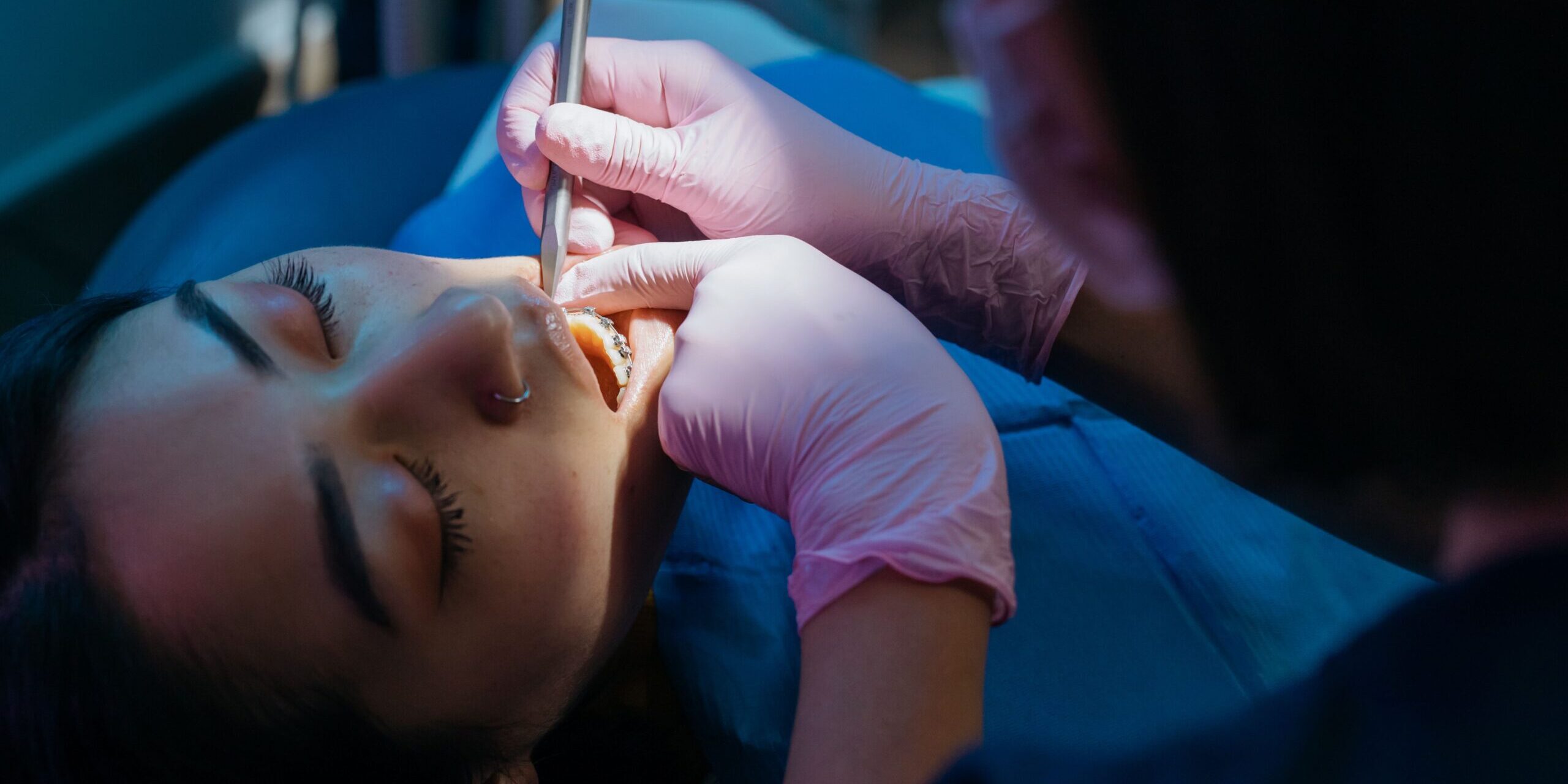
A broken tooth ranges from a harmless chipped edge to a split that cannot be saved, and the first hour matters more for some than others. These six steps cover what to do immediately, and how to tell which category you are in.
A damaged tooth can happen in a second. You may bite something hard, fall, grind your teeth, or discover that an old filling has broken away. Sometimes there is immediate pain; other times, the only sign is a rough edge catching your tongue.
Even small-looking damage can extend deeper than expected. A chip may involve only enamel, while a crack can travel toward the nerve. The right first-aid steps can protect the area until professional care is available.
For a dentist in London Ontario, call the dental office as soon as possible and explain how the injury happened, whether the tooth is painful, and whether any swelling or bleeding is present. The team can advise whether you need a same-day dental appointment.
Chipped, Cracked, and Broken Teeth Are Not the Same
A chip usually means a small piece of enamel has come away. A broken tooth has lost a larger section and may expose softer inner layers. A cracked tooth may still look complete even though a line extends through it.
Some cracks are shallow, while others reach the nerve or extend below the gumline. Pain when biting or releasing pressure can be a warning sign, but not every crack causes obvious symptoms.
Do not assume a painless tooth is safe to ignore.
Step 1: Stop and Check for a More Serious Injury
After a fall, collision, or blow to the face, check for a head or jaw injury.
Heavy bleeding, loss of consciousness, confusion, vomiting, difficulty breathing, or an inability to move the jaw normally requires emergency medical assessment.
A hospital should assess major facial trauma, suspected fractures, airway problems, or bleeding that will not stop.
Step 2: Rinse Your Mouth Gently
Rinse with clean, lukewarm water to remove food and blood. Do not scrub the tooth or probe the damaged area.
If the gum or lip is bleeding, apply gentle pressure with clean gauze or a folded cloth.
Avoid very hot water. Heat can increase discomfort and is not recommended when swelling is present.
Step 3: Find and Protect Any Tooth Fragments
If a piece has broken off, bring it to the dentist in a clean container with cold milk or saliva. The fragment may sometimes help with the repair.
Rinse it gently if needed, but do not use soap, alcohol, bleach, or glue.
A broken fragment is different from an entire permanent tooth that has been knocked out. For a knocked-out adult tooth, hold it by the crown, not the root, keep it moist, and seek immediate dental care.
Never reinsert a baby tooth.
Step 4: Reduce Swelling and Protect Your Mouth
Apply a cold compress to the outside of the cheek for short intervals. Wrap the cold pack in a thin cloth rather than placing ice directly on the skin.
If a sharp edge is cutting your tongue or cheek, cover it temporarily with orthodontic wax. Sugar-free gum may also work briefly when it can be placed safely.
Neither is a permanent repair.
Step 5: Avoid Making the Damage Worse
Chew on the opposite side and choose soft foods. Avoid ice, hard candy, popcorn kernels, sticky foods, and strong biting pressure.
Hot or cold foods may trigger sensitivity. Do not file the tooth, pull at a loose piece, repeatedly test the crack, or use household glue.
For discomfort, use an over-the-counter pain reliever only when it is normally safe for you and follow the package instructions. Do not place aspirin or another pill directly against the gum.
When Is a Damaged Tooth an Emergency?
Contact an emergency dentist in London promptly when:
- A large piece of the tooth is missing.
- The tooth is loose or has moved position.
- You can see a red, pink, or dark area inside the break.
- Pain is severe, constant, or worsening.
- The tooth hurts when you bite.
- There is swelling, fever, drainage, or a bad taste.
- Bleeding continues despite steady pressure.
- The injury involves a permanent tooth that has been knocked out.
A tiny painless chip may not need treatment within hours, but it should still be examined because sharp edges can injure soft tissue and minor damage may weaken the tooth.
How a Dentist May Repair the Tooth
Treatment depends on the damage, the healthy tooth remaining, and whether the nerve is affected.
A small chip may only need smoothing, bonding, or a tooth-coloured dental filling.
If a larger portion is missing or the tooth has become weak, a dental crown may cover and protect it.
When damage reaches the nerve, root canal treatment may allow the tooth to be restored.
A deeply split tooth, fracture below the gumline, or tooth that cannot be repaired may need removal. After an examination and X-rays, the dentist can explain the available options.
Emergency dentistry aims to relieve pain while preserving healthy tooth structure when possible.
Why You Should Not Wait for Pain to Start
A small enamel chip may be painless, creating false reassurance. A crack can collect bacteria, grow under chewing pressure, or eventually reach sensitive tissue.
Pain can also fade when a nerve is badly damaged, so reduced pain does not always mean healing. Colour changes, swelling, tenderness, or a pimple-like bump on the gum still require evaluation.
Preventing Future Chips and Cracks
Avoid chewing ice, hard candy, pens, and unpopped popcorn kernels, and never use your teeth to open packaging.
Wear a fitted mouthguard for contact sports. Ask about a night guard if you clench or grind, and have heavily restored teeth monitored regularly.
Also, avoid ignoring damaged fillings or crowns. A weakened restoration can allow more of the tooth to break if it is placed under repeated chewing pressure.
Getting a Damaged Tooth Checked in London
Hyland Dental Centre is located at 1725 Richmond St, London, ON N5X 3Y2, near Masonville Place.
Patients with a chipped, cracked, or broken tooth can call (519) 679-0808 to describe the problem and ask about a same-day dental appointment based on urgency and availability.
The clinic provides dental care in London, Ontario, for emergency and ongoing needs. Calling ahead helps the team prepare for the visit.
The Bottom Line
Rinse gently, control bleeding, save any fragments, use a cold compress, protect sharp edges, and avoid chewing on the damaged side. These steps may reduce further injury, but they cannot permanently repair the tooth.
Prompt assessment gives the dentist the best opportunity to relieve discomfort and preserve the tooth.
Seek emergency medical care for breathing difficulty, uncontrolled bleeding, suspected jaw injury, major facial trauma, or rapidly increasing swelling.
Frequently Asked Questions About Chipped, Cracked, and Broken Teeth
1. Can a chipped tooth repair itself?
No. A chipped tooth cannot repair itself because tooth enamel does not regenerate. Even a small chip can weaken the tooth or create rough edges that may irritate your tongue or cheek. A dentist can examine the damage and recommend the most appropriate treatment, such as smoothing the edge, dental bonding, a filling, or another restoration based on the extent of the chip.
2. How long can I wait before seeing a dentist for a chipped tooth?
You should contact a dentist as soon as possible, even if the chip seems minor or isn’t causing pain. While a small enamel chip may not require immediate emergency treatment, delaying an examination can allow the damage to worsen or increase the risk of decay and infection. If you have severe pain, swelling, bleeding, or a large fracture, seek prompt dental care the same day.
3. Can a cracked tooth get worse if left untreated?
Yes. A cracked tooth can worsen over time because of the pressure created by normal biting and chewing. As the crack becomes deeper, bacteria may enter the tooth and increase the risk of infection or damage to the dental pulp. Early diagnosis and treatment improve the chances of preserving the natural tooth and preventing more extensive procedures.
4. Will every chipped or broken tooth need a crown?
No. The right treatment depends on the size and location of the damage. Small chips may only require polishing, dental bonding, or a tooth-coloured filling. Larger fractures that weaken the tooth may require a dental crown for added protection. Your dentist will recommend the most suitable treatment after examining the tooth and, if necessary, taking dental X-rays.
5. Can I still eat with a chipped tooth?
Yes, but you should be careful until your dental appointment. Choose soft foods and chew on the opposite side of your mouth to avoid placing pressure on the damaged tooth. Avoid hard, crunchy, sticky, or very hot and cold foods if they cause sensitivity. Taking these precautions can help reduce discomfort and prevent the tooth from cracking further.
6. Can a cracked tooth be saved without extraction?
In many cases, yes. If the crack is detected early and has not extended too far below the gumline, treatments such as dental bonding, a crown, or root canal therapy may allow the tooth to be preserved. However, if the tooth is severely fractured or cannot be restored, extraction may be the best option. An examination is the only way to determine the appropriate treatment.
Six First Steps for a Broken Tooth
Act in this order. Most people can manage the first five themselves.
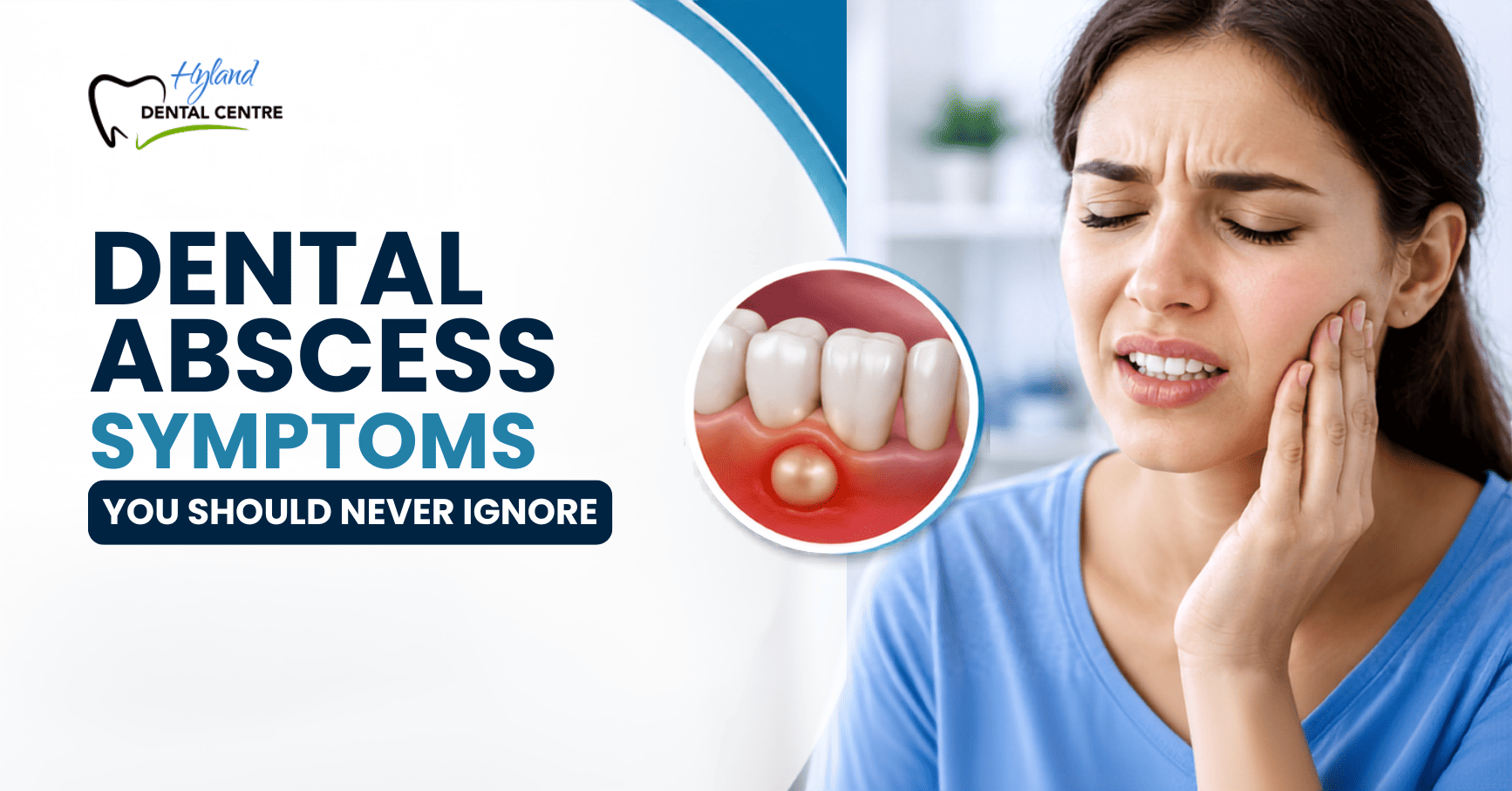
1. Rinse gently and find the fragment
Warm salt water, not vigorous swishing. If a piece has come away, keep it — a clean fragment of a front tooth can sometimes be bonded back with an excellent cosmetic result.
2. Control bleeding and swelling
Firm pressure with clean gauze for ten minutes handles most gum bleeding. Use a cold compress outside the cheek, never heat.
3. Protect the sharp edge
A jagged broken tooth will shred your tongue within hours. Sugar-free chewing gum or an over-the-counter temporary dental wax pressed over the edge is a legitimate interim measure.
4. Judge the urgency
Pink or red visible in the centre of the break means the pulp is exposed — that is urgent. Severe pain on biting, or a tooth that moves as a unit, suggests a fracture extending below the gum. A painless chipped corner is not urgent. See our emergency dental page.
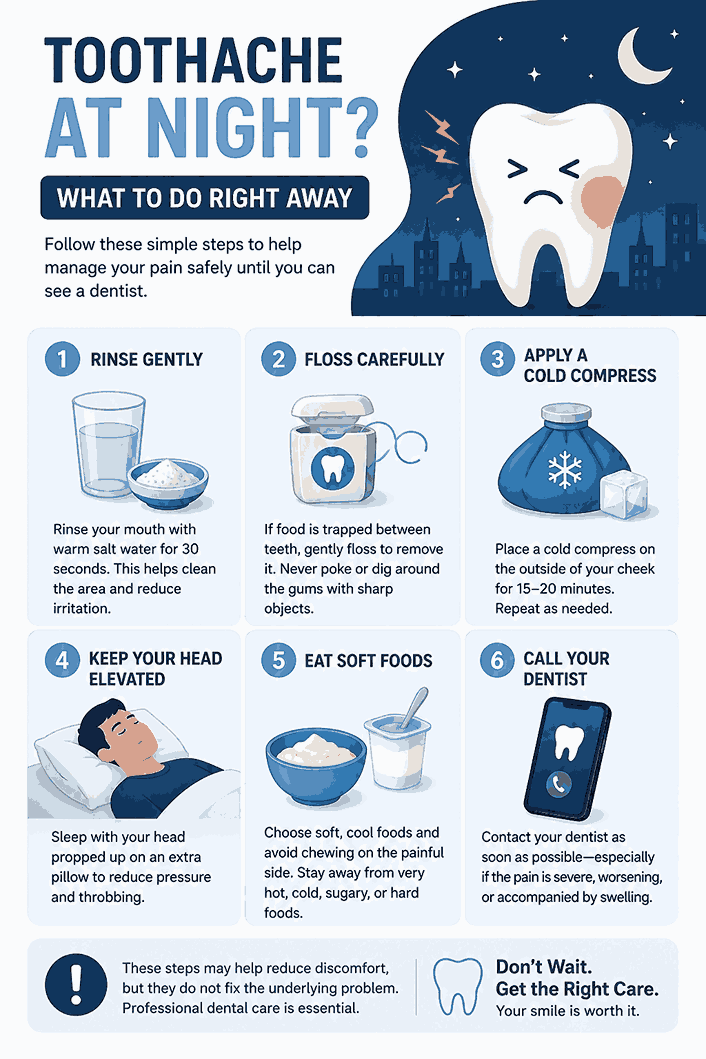
5. Manage pain sensibly
Take analgesia as directed on the packet and avoid extremes of temperature. Never put aspirin against the gum. Overnight, Health811 can advise whether you need to be seen sooner.
6. Get it assessed properly
Even a small broken tooth should be examined, because cracks propagate. Repair options scale with the damage: bonding for chips, a filling for moderate loss, a crown where the cusp has gone, a root canal plus crown if the pulp is involved, and extraction followed by an implant where the root itself is split. Fees reference the Ontario Dental Association suggested guide, and the Canadian Dental Association explains each procedure. Care is delivered under Royal College of Dental Surgeons of Ontario standards. To be seen, book an appointment.

Once the emergency is settled, the tooth usually needs rebuilding. Our guide to crowns and bridges explains when full coverage is required to stop a cracked tooth splitting, and same day treatment for severe tooth pain covers being seen quickly in the meantime.