
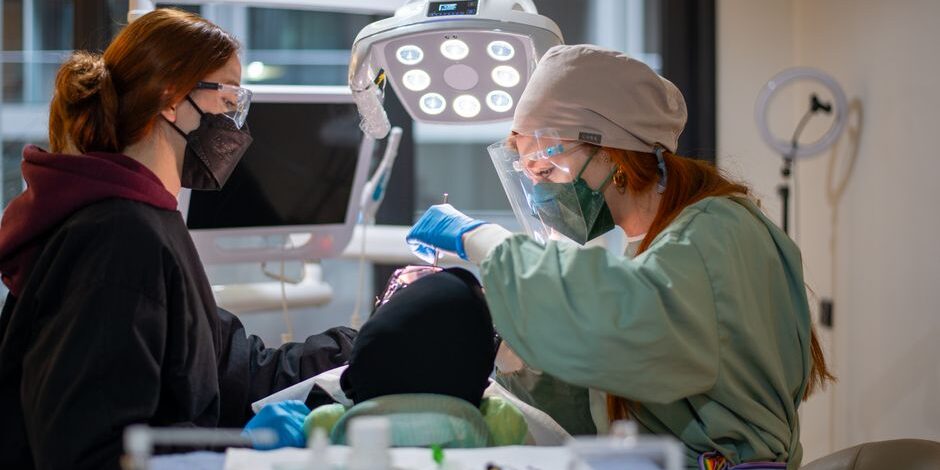
When a tooth starts throbbing on a Tuesday morning, the only question that matters is whether you can be seen today. A same day dentist appointment is not a different kind of dentistry; it is the same clinical care, prioritised so that pain and infection are dealt with before they get worse. This guide explains how to be seen faster in London, what can realistically be done in one visit, how to manage the pain until you arrive, and which symptoms mean a hospital instead.
Hyland Dental Centre holds time for urgent problems. Call (519) 679-0808, describe your symptoms, and ask for the earliest opening, or read how emergency dental care in London, Ontario is handled.
What a same day dentist can treat
A same day dentist appointment is deliberately narrow in scope. A same day dentist is aiming to stop the pain, control any infection, and make the tooth safe until definitive treatment can be finished properly.
- Severe toothache that pain relief no longer controls, often worse when lying down
- Swelling of the gum or face, which signals a dental abscess and is always urgent
- A knocked-out tooth, where the first hour genuinely decides whether it can be saved
- A cracked or broken tooth with a sharp edge, exposed nerve or bleeding, covered in our guide to chipped and cracked teeth
- A lost crown or filling leaving the tooth sensitive to air and pressure
- Bleeding that will not settle after an extraction or a mouth injury
- A wisdom tooth infection, with tender swollen gum around a partly erupted molar
- Trauma to teeth, lips or cheeks after a fall or a collision
5 ways to control the pain before you arrive
These measures buy comfort for a few hours. None of them treats the cause, and none removes the need for a same day dentist appointment.
- Take pain relief exactly as labelled. Follow the package directions and any advice from your pharmacist or physician about what is safe for you. Exceeding the dose does not make it work better.
- Rinse with warm salt water. Half a teaspoon in a cup of warm water, swished gently and spat out, several times a day.
- Use a cold compress outside the cheek. Fifteen minutes on, fifteen off, wrapped in a towel. Never apply heat to a swollen face, because warmth helps infection spread.
- Sleep propped up. Lying flat raises blood pressure in the head and makes dental pain noticeably worse overnight.
- Avoid the triggers. Nothing very hot or cold, nothing sugary, nothing hard, and chew on the other side. Do not put aspirin or clove oil directly on the gum, which burns the tissue.
Symptoms that need a hospital, not a same day dentist
A small number of dental problems need more than a same day dentist, because they are medical emergencies. Go to an emergency department immediately, or call 911, if you have any of the following.
- Difficulty breathing, or a sensation that the throat is closing
- Difficulty swallowing your own saliva, or drooling
- Swelling spreading under the jaw, into the neck, or closing the eye
- Fever with chills alongside dental pain
- Inability to open your mouth more than a few millimetres
- Uncontrolled bleeding that soaks through gauze after twenty minutes of firm pressure
- A dental injury that came with a blow to the head, dizziness or vomiting
Hospitals will stabilise you, drain an infection and prescribe medication, but they very rarely treat the tooth itself, so dental follow-up is still needed. Our guide to after-hours dental pain and who to call before the ER explains where each option fits.
What happens at a same day dentist appointment
- Focused examination and X-ray. One or two images of the tooth in question to see the nerve, the root and the surrounding bone.
- Diagnosis explained plainly. Which tooth, what is wrong, the realistic options, and what each one costs.
- Anaesthetic. Proper numbing before anything else, which by itself is a relief after a sleepless night.
- Removing the cause. Cleaning out decay, opening the tooth to release pressure, draining an abscess, or smoothing a fractured edge.
- Starting definitive treatment. Often the first stage of root canal treatment, a temporary filling, recementing a crown, or extraction where the tooth cannot be saved.
- Medication only where justified. Antibiotics support treatment when there is spreading swelling or fever; they are not a substitute for it.
- A written plan. Aftercare instructions and a booked follow-up for the permanent restoration.
Our article on what to expect from root canal treatment covers that appointment in detail. If dental anxiety is the reason you have been tolerating the pain, mention it when you call: sedation dentistry exists precisely so fear does not turn a treatable tooth into an extraction.
How to get a same day dentist appointment faster
- Phone rather than email. Urgent slots are allocated by the person answering the phone, not by a web form.
- Call first thing. Cancellations are released early, so a same day dentist opening often goes to whoever rings at nine.
- Lead with the clinical facts. Where the pain is, how long it has lasted, whether there is swelling or fever, and the pain out of ten.
- Say you can come immediately. Flexibility is the single biggest factor in being seen today.
- Mention medical conditions and medications. These affect both urgency and what treatment is safe.
- Ask for the cancellation list. If nothing is free today, this is how you get in tomorrow morning.
A same day dentist will still see you if you have never attended the practice before, booked as an urgent case. Our guide to what to expect at a new patient dental visit explains the fuller assessment that follows once the emergency is settled, and the patient FAQ covers the practical details.
What same day treatment costs
Fees at a same day dentist depend on what is actually done, not on how urgently it is done. An emergency examination with an X-ray is the smallest part of the bill. Draining an abscess, placing a temporary filling or recementing a crown sits in the middle. Root canal therapy, a surgical extraction or a new crown costs more and is usually spread across more than one appointment.
Ask for a written estimate before treatment starts, and ask which procedure codes will be submitted so you can check your coverage. Many plans pay a share of urgent care. Payment arrangements can be discussed when you book an appointment.
Delaying to save money rarely works out. A tooth a same day dentist could have saved with a root canal this week can become an extraction plus a dental implant a month later, at several times the cost.
How to avoid needing urgent care again
- Keep routine examinations and hygiene appointments, which catch decay and cracks while treatment is still small
- Replace a heavily filled or cracked tooth on schedule rather than in a crisis
- Wear a night guard if you grind or clench, and a mouthguard for contact sport
- Act on sensitivity early instead of waiting to see whether it settles
- Read up on what counts as a dental emergency so you recognise the signs sooner
- Deal with a toothache that wakes you at night rather than hoping it passes
Preventive advice from the Ontario Dental Association points the same way. The cheapest same day dentist appointment is the one you never need to make.
Same day dentist: frequently asked questions
Can I really be seen the same day for tooth pain?
Often yes. Practices hold slots for urgent problems and release cancellations each morning. Availability changes daily, so calling is the only way to know. Phone (519) 679-0808, describe your symptoms, and ask for the earliest opening.
How long can severe tooth pain safely wait?
Pain that stops you sleeping or eating, or any pain with swelling or fever, should be assessed the same day. Dental infection can spread into the jaw and neck, and the treatment needed next week is usually larger than what would have worked today.
Will I just be given antibiotics?
Antibiotics alone are not a fix. They can reduce swelling and buy time, but the source inside the tooth still has to be treated with drainage, root canal treatment or extraction. Expect a diagnosis and treatment, not only a prescription.
Is a hospital or a dentist better for a toothache?
See a dentist for the tooth itself. Go to a hospital emergency department if you have spreading facial swelling, difficulty breathing or swallowing, a fever with chills, or uncontrolled bleeding, because those need medical stabilisation first.
Will the tooth have to be removed?
Not usually. Most painful teeth can be saved with root canal treatment and a crown, even when the pain is severe. Extraction is the last resort, considered when a tooth is fractured below the gum or the supporting bone is too damaged.
What should I say when I call?
Which tooth hurts, how long it has been going on, whether there is swelling, bleeding or fever, the pain out of ten, and whether the tooth was injured. Also mention your medications and any medical conditions, because both affect urgency.
Reach a same day dentist in London today
You do not have to wait for severe tooth pain to fade on its own, and it usually will not. Call (519) 679-0808, use the contact page, or book an appointment at our Richmond Street clinic. You can read about Hyland Dental Centre, browse the full list of dental services, or see how emergency dental care in London is prioritised. Reaching a same day dentist early is usually the difference between saving a tooth and losing it.
This article is general information for patients in London, Ontario and is not a diagnosis or a substitute for professional advice. If you have facial swelling, difficulty breathing or swallowing, a fever with dental pain, or uncontrolled bleeding, seek emergency medical care immediately.