
Bleeding when you brush is so common that most people ignore it, which is exactly why gum disease progresses quietly. These seven signs are the point at which searching for a dentist near me stops being optional.
If you are experiencing inflamed gums, it may be time to see a dentist near you in London. Gum inflammation can be caused by a number of factors, such as plaque buildup, incorrect brushing habits, and periodontal disease. Left untreated, inflamed gums can lead to more serious dental problems, such as gingivitis and even tooth loss. You can search for the “best dentist near me in London” and find top dentist in your area.
1. What are the symptoms of inflamed gums?
The symptoms of inflamed gums can vary depending on the person and the severity of the inflammation. In general, however, inflamed gums will be swollen and red, and may bleed easily. They may also be sore or sensitive to the touch. If left untreated, inflamed gums can lead to more serious health problems, such as gum disease.
2. What causes inflamed gums?
There are many different causes of inflamed gums. One of the most common is plaque, a sticky film of bacteria that builds up on teeth. If plaque is not removed regularly with brushing and flossing, it can irritate the gums and cause them to become inflamed. Other causes of inflamed gums include gum disease, smoking, and certain medications.
3. How is inflamed gum tissue treated?
There are a few different ways to treat inflamed gum tissue. One is to use a medicated mouthwash or rinse. This will help to kill any bacteria that may be causing the inflammation. You can also use a topical cream or ointment to help reduce the inflammation. If the inflammation is severe, your dentist may prescribe antibiotics to help get rid of the bacteria.
4. Are there any home remedies for inflamed gums?
Gum disease, or gingivitis, is a common problem that can occur in people of all ages. Gingivitis is an inflammation of the gums that is usually caused by plaque buildup on the teeth. If left untreated, gingivitis can progress to periodontitis, a more serious form of gum disease. There are many home remedies that can be used to treat gingivitis, including salt water rinses, baking soda rinses, and hydrogen peroxide rinses. In addition, good oral hygiene habits, such as brushing and flossing teeth twice a day, can help to prevent gingivitis from developing.
5. How can inflamed gums be prevented?
There are a few ways to prevent gum inflammation. One is to brush your teeth and gums regularly with a soft toothbrush and fluoride toothpaste. You should also floss every day. Another way to prevent gum inflammation is to eat a healthy diet that includes plenty of fruits and vegetables. You should also avoid sugary foods and drinks. If you smoke, quit smoking. And lastly, see your dentist for regular checkups and cleanings.
Seven Signs It Is Time to See a Dentist Near Me
Gum inflammation exists on a spectrum. The early stage is fully reversible; the later stage is not, though it can be stabilised.

1. Bleeding when you brush or floss
Healthy gums do not bleed. Bleeding means inflammation, and it is the earliest signal worth acting on.
2. Redness and puffiness along the gumline
Healthy tissue is pale pink and firm with a knife-edge margin. Red, swollen, shiny tissue indicates gingivitis.
3. Persistent bad breath or a bad taste
Bacteria below the gumline produce sulphur compounds. Breath that returns within an hour of brushing suggests the source is subgingival, which a toothbrush cannot reach.
4. Gums that have receded
Teeth appearing longer, or new sensitivity at the gumline, points to lost attachment. Any dentist near me will measure this rather than estimate it.
5. Deep pockets on measurement
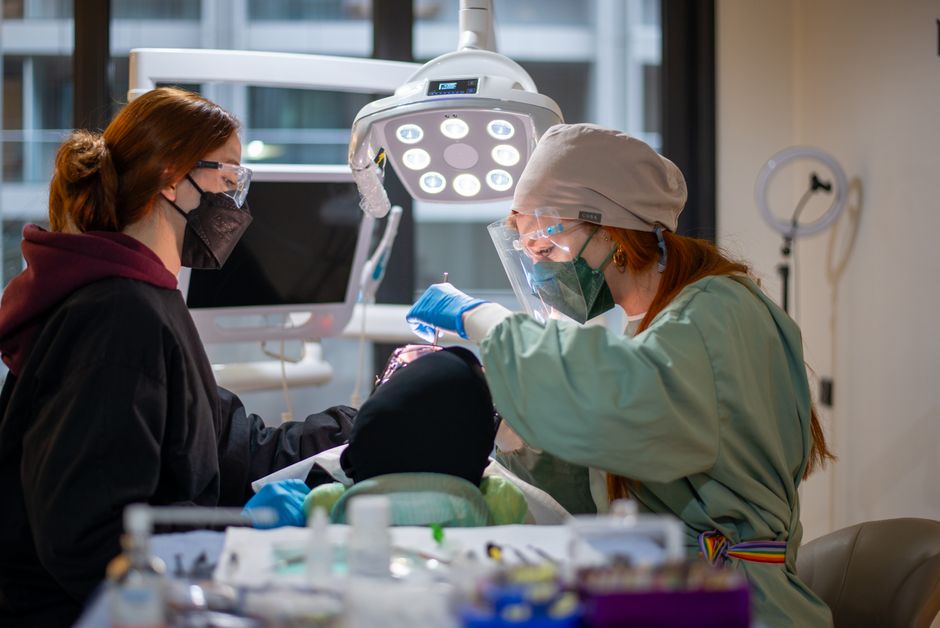
This is the objective test. Pocket depths up to about three millimetres are normal; four and above indicate attachment loss. Numbers recorded tooth by tooth and compared year on year are the clearest evidence of whether treatment is working.
6. Teeth that feel loose or have shifted
Late-stage periodontitis, where supporting bone has been lost. Urgent — see a dentist near me promptly, as stabilisation is still possible.
7. Pus, or a discrete swelling on the gum
A periodontal abscess needs drainage and treatment of the cause, not just antibiotics. Contact a practice the same day; see our emergency dental page.
Gingivitis versus periodontitis
Gingivitis is inflammation without bone loss and reverses within weeks of proper cleaning. Periodontitis involves irreversible bone loss; the aim shifts to halting progression through scaling and root planing, improved home care and shorter recall intervals. Smoking, diabetes and some medications all accelerate it, and the Canadian Dental Association explains the links. Fees reference the Ontario Dental Association suggested guide. Do not wait for pain — gum disease is usually painless until late. Book an appointment or read our FAQ.

What Happens When You See a Dentist Near Me About Gums
The appointment is more measurement than treatment, at least at first, because you cannot manage what you have not quantified.
The assessment
A dentist near me will record pocket depths around every tooth, note where bleeding occurs on probing, check for recession and mobility, and take radiographs to assess bone levels. That produces a chart you can be compared against next year, which is the entire point.
The first phase of treatment
Usually thorough scaling above and below the gumline, sometimes across two appointments, plus specific home-care coaching aimed at the sites that are actually bleeding. Generic advice does not work; site-specific advice does.
The review
Six to eight weeks later the measurements are repeated. Improvement confirms the plan; no improvement means escalating — shorter intervals, referral to a periodontist, or investigating contributing factors such as diabetes or smoking. Asking a dentist near me to show you the before-and-after numbers is entirely reasonable.
Keeping it stable
Gum disease is controlled rather than cured. Stability depends on recall intervals matched to your risk and daily interdental cleaning you will actually do. Read our teeth cleaning page or book an appointment.
Inflamed gums usually respond to a thorough teeth cleaning and better home care, but persistent cases need a proper assessment. Booking runs through Hyland Dental Centre or our appointment page.