
Modern dentistry in London, Ontario looks very different from the dentistry of twenty years ago, and most of that change is in the relationship rather than the equipment. The clinical work of dentists in London has changed less than the practice around it. Consent, record keeping, prevention and access have all shifted substantially, and those changes affect your experience more than any piece of equipment.
A new era has begun for dentists in London, Ontario. With the recent opening of the new dental clinic, patients now have easier access to quality dental care. The clinic is state-of-the-art and features the latest technology, which will allow the dentists to provide better care for their patients.
Dentists in London, Ontario are entering a new era, driven by advances in technology, materials, and patient care standards. Practices across the city are investing in modern equipment and pursuing ongoing training to keep up with the latest techniques.
This shift is also being driven by growing demand for dental services in the region. As the population grows, so does the need for accessible, high-quality dental care, which is pushing local practices to expand their services and appointment availability.
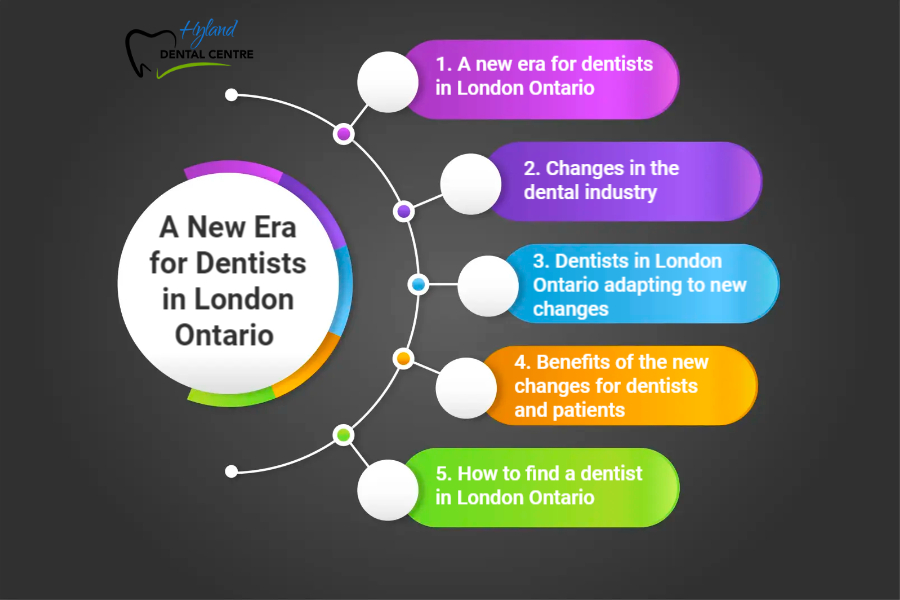
2. How modern dentistry changed the dental industry
The dental industry has undergone a number of changes in recent years. One of the most significant changes has been the increasing use of dental implants. Dental implants are now often used to replace missing teeth, and they are also being used to secure dental prostheses. This has led to a growing demand for dental implants, and the industry is now responding by increasing its production capacity.
3. Dentists in London, ON, adapting to new changes
Dentists in London, Ontario, are adapting to new changes in the dental industry. With new technology and procedures, they are able to provide better service to their patients. This includes the use of digital X-rays, which are more accurate and allow for quicker diagnosis and treatment. Additionally, they are using new dental materials that are more durable and look more natural. As a result, patients are able to have better dental health and a more pleasant experience at the dentist.
4. Benefits of the new changes for dentists and patients
The new changes to the dental industry are expected to bring many benefits to both dentists and patients. Dentists will now be able to do more with less time and patients will have shorter wait times and receive better care.
One of the main improvements for dentists is the new digital dental record system. This system will make it easier for dentists to keep track of their patients’ records and to quickly find the information they need. This will help to reduce the amount of time that is needed for each appointment.
The new dental equipment will also help to speed up the treatment process. For example, the new laser modern dentistry equipment can remove tooth decay much more quickly than traditional methods. This means that patients will have less time in the dentist’s chair and will be able to get back to their normal routine sooner.
Another benefit of the new changes is that patients will have access to a wider range of dental services. For example, there will now be more dental clinics that offer orthodontic services. This means that patients will have more choice when it comes to selecting a clinic that meets their needs.
Overall, the new changes are expected to bring many benefits to both dentists and patients. This will help to improve the quality of dental care that is available to the public.
5. How to find a modern dentistry practice in London Ontario
If you are looking for a dentist in London, Ontario, there are a few things you can do to make sure you find the right one for you. First, ask your friends and family for recommendations. If they have a dentist they like, they may be able to refer you to them. You can also look online for reviews of local dentists. This can give you a good idea of what to expect from different practices.
Once you have a few names, you can call the dentists’ offices to ask about their services and rates. This will help you narrow down your choices. You should also schedule appointments for a consultation so you can meet the dentist and see if you feel comfortable with them.
Choosing a dentist is an important decision, so take your time and make sure you find one that is right for you.
Six Ways Modern Dentistry in London Has Changed Patient Care
Professional obligations are set by the Royal College of Dental Surgeons of Ontario, and several of these shifts reflect changes in those standards.

1. Consent became a conversation
Informed consent now means being told the diagnosis, the realistic alternatives including doing nothing, the risks of each and the cost — then deciding without pressure. A generation ago patients were far more often simply told what would happen.
2. Prevention displaced repair as the default
The old model was to find cavities and fill them. Dentists in London now assess risk and try to arrest early lesions with fluoride and diet change rather than drilling immediately. Recall intervals are set by individual risk instead of a universal six months.
3. Records became comparable
Digital charting, photographs and periodontal measurements recorded tooth by tooth mean this year can be compared with last year. Monitoring only means something when there is a baseline; without one, “we will keep an eye on it” is just a phrase.

4. Imaging became justified case by case
Radiographs are no longer routine at fixed intervals. Every image needs a recorded clinical reason, and digital sensors cut the dose substantially. Our digital X-ray page explains the current approach.
5. Comfort became a clinical consideration
Dental anxiety is now treated as something to manage rather than endure — longer appointments, agreed pause signals and sedation options where appropriate. This matters because avoidance is itself a cause of disease.
6. Access widened considerably
Federal coverage has brought many previously uninsured households into regular care, which changes the population dentists in London see. Fees still reference the Ontario Dental Association suggested guide, and the Canadian Dental Association publishes patient guidance. See our clinic or book an appointment.

Modern practice shows up in small things such as digital X-ray dose reduction and same-visit crown and bridge planning. Our current setup is described at Hyland Dental Centre.