
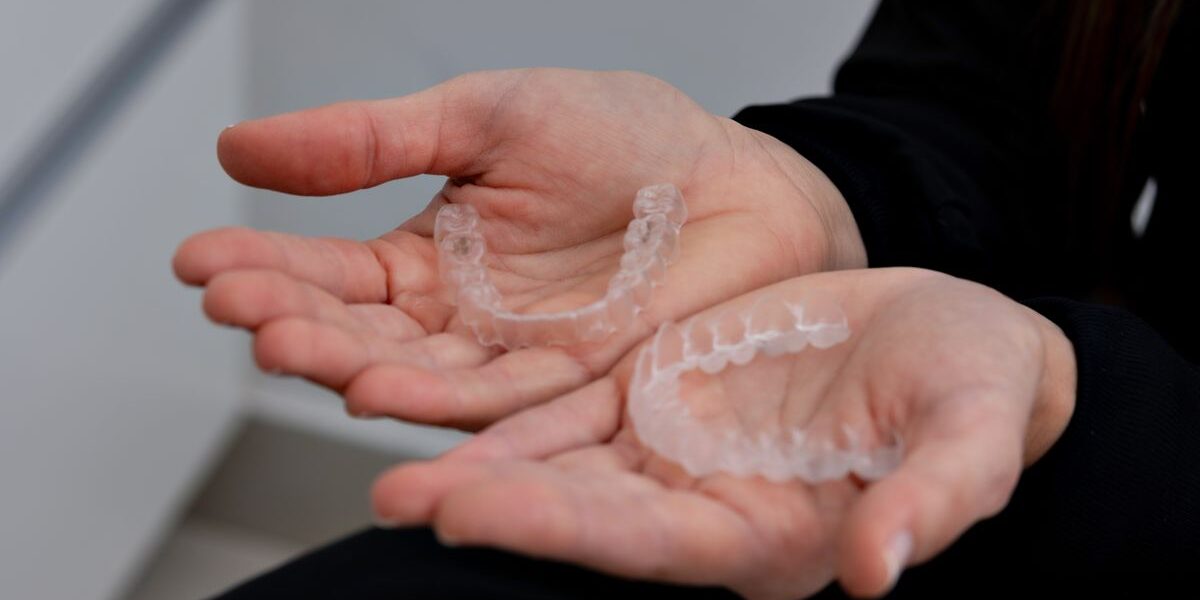
If you or a family member could benefit from straighter teeth, you’re likely comparing two common paths: traditional braces and clear aligners like Invisalign. Both are effective forms of orthodontic treatment, but they work differently and suit different lifestyles. This guide breaks down the basics to help you have a more informed conversation with a dentist.
Orthodontic treatment isn’t just about appearance. Properly aligned teeth can be easier to clean, may reduce uneven wear, and can help with certain bite issues. The right option for you depends on your specific dental needs, your daily routine, and what a dental professional recommends after an evaluation.
Traditional braces vs. clear aligners
Traditional braces
Braces use brackets and wires fixed to the teeth to gradually shift them into place. They’re a well-established orthodontic option that can address a wide range of alignment and bite concerns, including some more complex cases. Because they’re fixed in place, there’s no risk of forgetting to wear them.
Clear aligners (Invisalign)
Clear aligners are a series of custom, removable trays that gradually move teeth over time. Many patients like that they’re less noticeable than metal brackets and can be taken out for eating and brushing. They tend to work best for mild to moderate alignment concerns, though a dentist can assess whether they’re suitable for your situation.
How to choose the right orthodontic option
There’s no single right answer. Some of the factors a dentist will typically consider include:
- The complexity of the alignment or bite issue
- Your age and stage of dental development
- How consistently you’re able to wear removable aligners
- Personal preferences around appearance and daily routine
An in-person evaluation is really the only way to know which orthodontic option fits your case, since every smile is different.
Questions patients often ask
Is Invisalign as effective as braces?
Clear aligners can be very effective for many patients, particularly with mild to moderate alignment concerns. For more complex cases, traditional braces may still be the more suitable option. A dentist can advise after reviewing your teeth and bite.
How long does orthodontic treatment take?
Treatment length varies widely depending on the individual case, ranging from several months to a couple of years. Your dentist can give you a more specific estimate once they’ve assessed your teeth.
Is orthodontic treatment only for teenagers?
No. Many adults pursue orthodontic treatment for the first time, or to address changes that developed over the years. Both braces and clear aligners are commonly used with adult patients.
Exploring orthodontic options in London, Ontario
If you’re weighing braces against clear aligners, Hyland Dental’s Invisalign page has more detail on what that option involves. For general background on orthodontic care, the Canadian Dental Association’s overview of dental procedures is a helpful independent resource. Availability isn’t guaranteed, and only a dental professional can confirm what’s appropriate for you.