

A toothache that wakes you at two in the morning feels like an emergency, and sometimes it is. Knowing which symptoms genuinely need an emergency dentist and which can wait for a normal appointment saves both an unnecessary trip and a dangerous delay.
A toothache can feel manageable during the day and unbearable once you try to sleep. With fewer distractions, every pulse may seem louder, and lying flat can make pressure feel more noticeable. Pain that keeps you awake deserves attention.
The goal overnight is not to diagnose or permanently treat the tooth at home. It is to recognize warning signs, reduce discomfort safely, and arrange professional care.
When seeking emergency dental care in London, call and describe exactly what is happening. The dental team can help determine whether you need a same-day dental appointment or hospital care.
Why Tooth Pain Often Feels Worse at Night
Nighttime pain does not always mean the condition suddenly worsened, but a toothache that wakes you should not be dismissed.
Possible causes include deep decay, inflammation inside the tooth, a crack, a loose filling, gum infection, or clenching and grinding. Pain may also seem to travel into the jaw, ear, or face, so an examination is needed to identify the source.
When the Toothache Can Probably Wait Until Morning
Mild discomfort may wait a few hours when it improves after removing trapped food, is not worsening, and is not accompanied by swelling, fever, trauma, or difficulty swallowing.
“Wait until morning” should still mean calling when the office opens, not postponing care for weeks. Book a visit for recurring sensitivity, chewing pain, a missing piece of tooth, a loose filling, or pain that comes and goes.
When to Contact an Emergency Dentist Promptly
Call for urgent dental advice when the pain is severe, constant, throbbing, or strong enough to prevent sleep.
You should also contact a dentist promptly when:
- The pain is getting worse rather than improving.
- It hurts to bite or touch the tooth.
- Your face, gum, or jaw is swollen.
- You notice a pimple-like bump on the gum.
- There is a bad taste, drainage, or persistent bad breath.
- A filling or crown has fallen out and the tooth is painful.
- The tooth is cracked, broken, loose, or was recently injured.
- You have a fever or feel generally unwell.
Treatment may involve a filling, crown, gum care, a root canal, or removal of a tooth that cannot be repaired. The correct treatment depends on the cause, not simply the pain level.
When a Toothache Becomes a Medical Emergency
Most toothaches are best treated by a dentist, but certain symptoms should be treated as medical emergencies.
Call 911 or go to the nearest emergency department if you have:
- Difficulty breathing or swallowing
- Rapidly increasing swelling in the face or neck
- Swelling spreading toward the eye
- Uncontrolled bleeding
- Major facial trauma
- Signs of a serious spreading infection
A hospital can manage airway risks, severe infection, bleeding, or trauma, but dental follow-up is usually still needed to treat the cause.
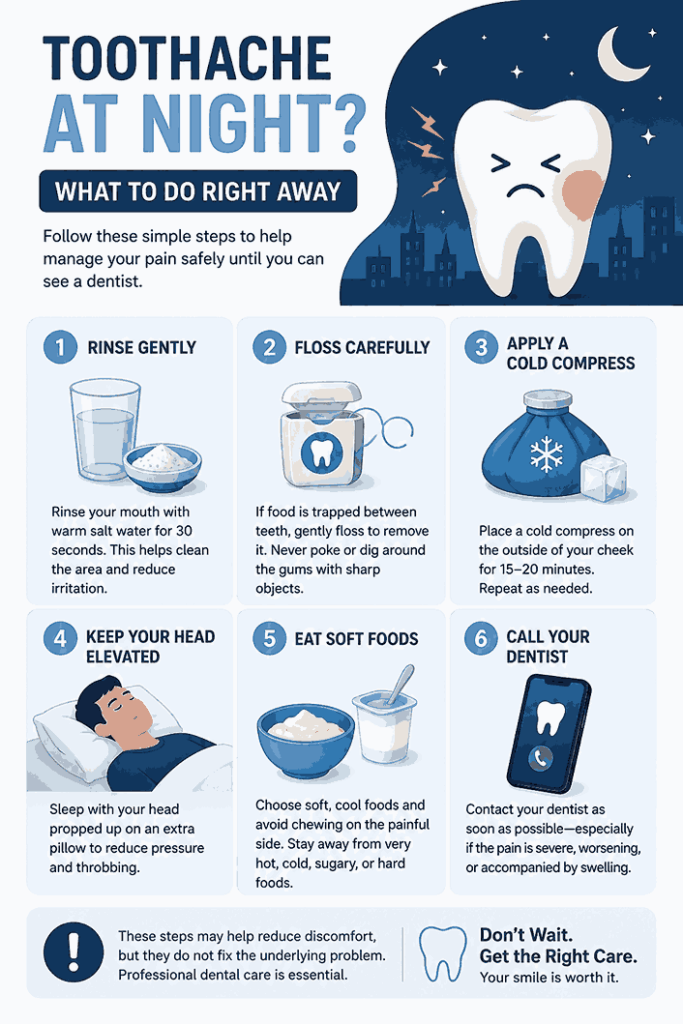
What You Can Safely Do Overnight
Start by calling your dental office. If it is closed, listen to the voicemail instructions and leave a clear message when appropriate.
Include your name, phone number, the location of the pain, whether there is swelling, and how long the symptoms have been present.
While waiting:
- Rinse gently. Warm salt water can help clean the area. Do not use extremely hot water.
- Floss carefully. If food may be trapped between two teeth, gently use floss. Never dig around the gum with a pin, toothpick, or sharp object.
- Use a cold compress. Place it on the outside of the cheek for short intervals. Do not apply ice directly to the skin or tooth.
- Keep your head raised. Resting with an extra pillow may make throbbing feel less intense.
- Choose soft foods. Avoid chewing on the painful side and stay away from very hot, cold, sugary, or hard foods.
- Use pain medicine carefully. Take an over-the-counter medication only if it is normally safe for you and follow the label. Ask a pharmacist when uncertain because medical conditions, allergies, pregnancy, and other medications can affect what is safe.
These measures may ease the night, but they do not cure decay, repair a crack, or treat the source of infection.
What Not to Do for a Nighttime Toothache
Do not place aspirin, crushed tablets, or other medication directly against the tooth or gum. This can burn the soft tissue.
Do not apply a heating pad to facial swelling because heat may make the swelling worse.
Avoid using leftover antibiotics. Antibiotics are not the correct treatment for every toothache, and using the wrong medication can delay proper care. Even when antibiotics are prescribed for a spreading infection, the tooth usually still needs dental treatment.
Do not repair a tooth or crown with household glue or repeatedly test the painful tooth by biting on it.
What Happens at an Emergency Dental Visit?
At the appointment, the dentist will ask when the pain started, what triggers it, whether it wakes you at night, and whether there has been swelling or an injury.
The tooth and surrounding tissues will be examined, and X-rays may be taken when needed.
Treatment may include repairing a cavity, replacing a filling, stabilizing a tooth, treating an infection, beginning root canal therapy, or arranging an extraction. Sometimes the first visit focuses on pain relief and stabilization, with another visit completing the restoration.
Patients looking for dental in London Ontario should not assume that every painful tooth must be removed. Many teeth can be restored when the problem is assessed early enough.
Reducing the Chance of Another Nighttime Toothache
Regular examinations can identify decay, cracked fillings, gum problems, and grinding before they become emergencies.
Brush with fluoride toothpaste, clean between your teeth, and avoid chewing ice or opening packaging with your teeth. Ask about a night guard if you clench or grind.
A tooth that has recently been treated should also be checked when the pain is increasing instead of gradually improving.
Getting Help in London, Ontario
Hyland Dental Centre is located at 1725 Richmond St in North London, near Masonville Place.
If a toothache keeps you awake or returns repeatedly, call (519) 679-0808 and describe your symptoms. The clinic offers emergency assessments and may be able to arrange a same-day dental appointment depending on urgency and availability.
The Bottom Line
A mild toothache without swelling may be able to wait until the office opens, but severe, worsening, or sleep-disrupting pain should be assessed promptly.
Facial swelling, fever, drainage, trauma, or pain when biting can signal a problem that should not be ignored.
Use cold—not heat—avoid placing medication directly on the gums, and seek professional care instead of relying on temporary home remedies.
For breathing or swallowing difficulty, rapidly spreading swelling, uncontrolled bleeding, or major facial trauma, go to an emergency department immediately.
Common Questions About Toothaches at Night
1. Can a toothache go away on its own?
A toothache may temporarily improve, but that doesn’t necessarily mean the underlying problem has resolved. Tooth decay, infection, or a cracked tooth can continue to worsen even if the pain decreases. If your toothache lasts more than a day or returns repeatedly, it’s important to have it evaluated by a dentist.
2. Why does my tooth only hurt when I lie down?
Lying down can increase blood flow and pressure around inflamed tissues, making tooth pain feel more noticeable at night. It can also make throbbing sensations seem stronger because there are fewer distractions. While changing your sleeping position may help reduce discomfort, it won’t treat the underlying dental problem.
3. Can stress cause a toothache at night?
Yes. Stress can contribute to nighttime teeth grinding or jaw clenching, placing extra pressure on the teeth and surrounding muscles. This may lead to tooth sensitivity, jaw soreness, or headaches. A dentist can determine whether grinding is contributing to your symptoms and recommend appropriate treatment if needed.
4. Is a nighttime toothache always caused by a cavity?
No. Although tooth decay is a common cause, nighttime tooth pain may also result from a cracked tooth, gum disease, an exposed tooth root, a failing filling or crown, or teeth grinding. A dental examination is the best way to determine the exact cause and recommend the right treatment.
5. Can I sleep if I have a severe toothache?
If possible, sleep with your head elevated and avoid lying flat, as this may reduce pressure around the affected tooth. However, severe or worsening pain that keeps you awake should not be ignored. Contact a dentist as soon as possible to determine whether urgent treatment is needed.
6. Will antibiotics stop a toothache?
Not always. Antibiotics are only appropriate for certain dental infections and won’t treat problems such as cavities, cracked teeth, or damaged fillings. Even when antibiotics are prescribed, the affected tooth usually still requires dental treatment to address the underlying cause.
When a Night-Time Toothache Needs an Emergency Dentist
Pain intensity is a poor guide to urgency. What matters is swelling, spread and whether you can still swallow and breathe comfortably.
Go to hospital, not a dental chair
Swelling that closes your eye, crosses the jawline into the neck, or makes swallowing or breathing difficult is a medical emergency. So is a fever with facial swelling. An emergency dentist cannot manage an airway; the emergency department can. Do not wait until morning for these.
Same-day emergency dentist
Localised swelling around one tooth, pain that wakes you and does not settle with over-the-counter analgesia, a tooth knocked out or pushed out of position, or uncontrolled bleeding all warrant same-day contact. A knocked-out adult tooth is time-critical — keep it moist in milk or saliva, never scrub the root, and seek care immediately. See our emergency dental page.
Usually safe until morning
A lost filling, a chipped edge without pain, a loose crown or mild sensitivity to cold can wait. Cover a sharp edge with sugar-free gum if it is cutting your tongue and call when the practice opens.
Getting through the night
Sleep propped up rather than flat, since lying down increases pressure and pain. A cold compress on the outside of the cheek for fifteen minutes at a time helps. Take analgesia as directed on the packet, and never place aspirin directly against the gum — it burns the tissue. Do not apply heat to a swelling. In Ontario, Health811 provides free nurse-led advice overnight if you are unsure whether to attend hospital.
Why it usually happens at night
Pain from an inflamed nerve genuinely worsens when you lie down, and there are fewer distractions. It is not imagination. Care is provided under standards set by the Royal College of Dental Surgeons of Ontario, and the Canadian Dental Association publishes guidance on managing dental pain. Once the emergency is resolved, ask about the underlying cause — see our root canal page or book an appointment.
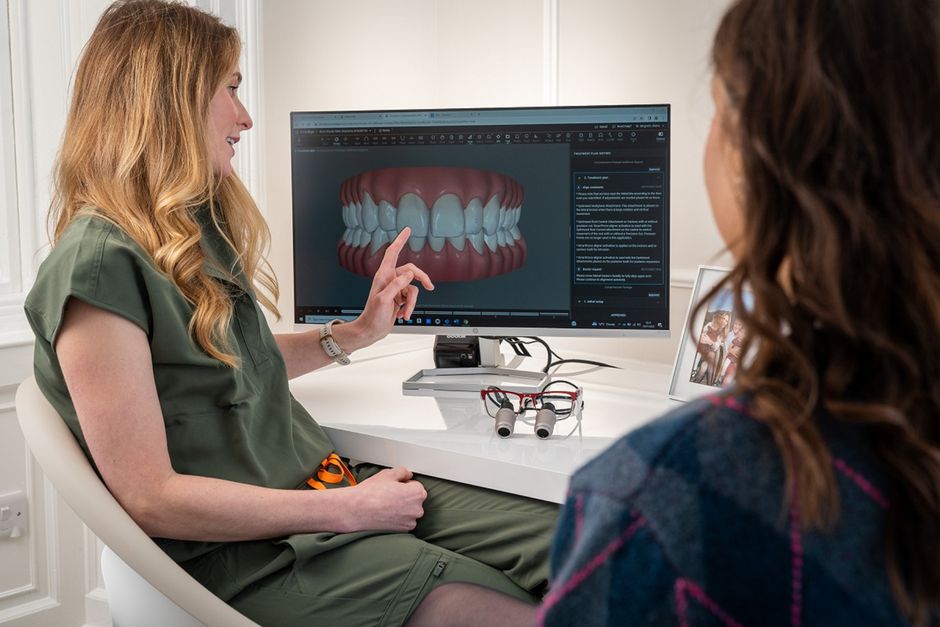
If the pain is still there in the morning, do not wait it out. Same day treatment for severe tooth pain explains how to get an urgent appointment, and dental infection and facial swelling covers what to do if your face starts to swell.