Sedation Dentistry – Do you feel anxious when you go to the dentist?
Whether you are undergoing a dental procedure that requires sedation or you wish to calm your nerves, sedation dentistry may be the solution for you. It can also be used if you have a strong gag reflex or low pain tolerance.
At our office, we are happy to provide sedation dentistry to our patients to make their visit as comfortable as possible inside a relaxed and comfortable office environment to manage your anxiety during your appointment.
All you need to do is arrive at Hyland Dental before your scheduled treatment, and go home to rest right after. Our dentists stay with you every step of the way — during preparation, throughout the procedure, and post-op care.
We examine your medical history, expertly perform the dental treatment , and ensure a fast and smooth recovery. To ensure your safety and comfort throughout the procedure, we provide various type of sedation to manage your dental anxiety.
Types Of Sedation Options
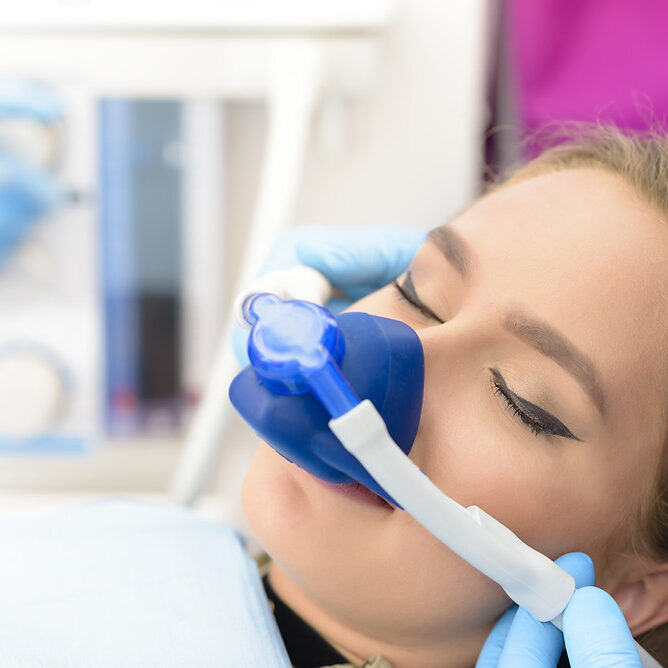
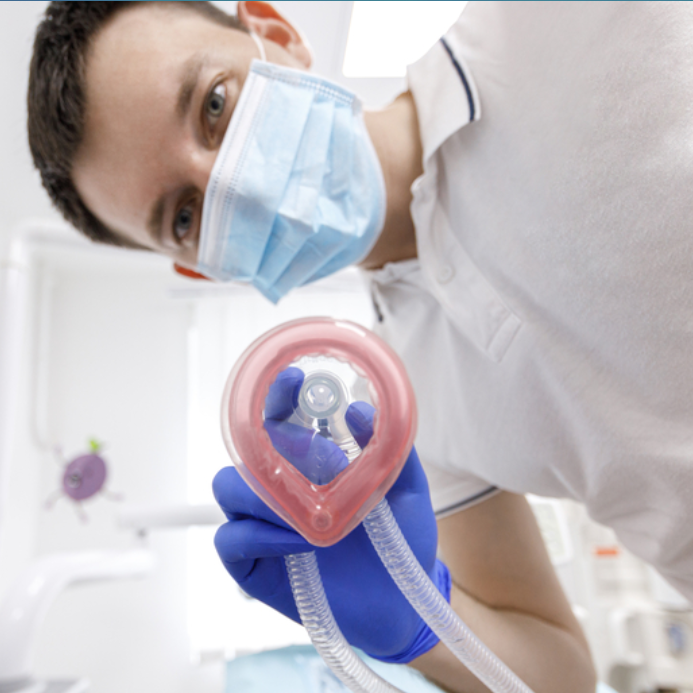
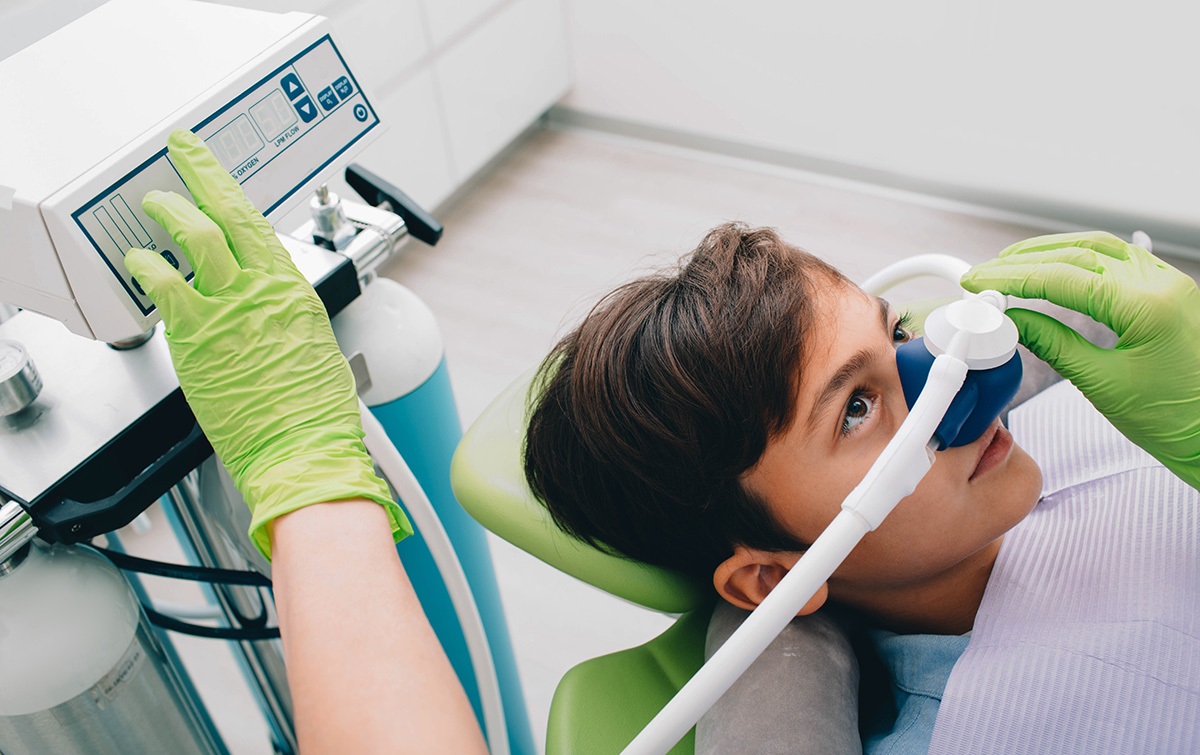
Laughing gas (Nitrous Oxide): it is a popular sedative gas used as a conscious sedative. A small mask is placed on the nose and the gas is administrated as a mixture with the oxygen and is effective at producing a calming effect in a patient during the entire procedure. You will still be able to communicate while under the effect of the gas.
It creates a reducing tension sensation that calms and relaxes you and allows you to complete your treatment much more easily.
It works best for patients who have mild to moderate anxiety. It is not intended to put you to sleep. At the end of the appointment, oxygen will be administered to flush out the gas.
A benefit of laughing gas is that it wears off almost immediately, and there are rarely side effects. You will be able to return to your daily activities and a companion with you is not required. It is important that you don’t eat or drink liquids to 3 hours prior to your treatment.
Oral sedation:
An anti-anxiety medication usually will be prescribed and administered in a pill form that you take one hour prior to your appointment in our office. The medication will relax you during your treatment. This type of sedation does not put you to sleep, but is still effective at dulling the senses. During the procedure, you will be monitored for your vitals (Heart Rate and Blood Pressure). It is important that you don’t eat or drink anything for at least 3 hours prior your appointment. After the procedure, you will need to go home with an accompany adult as you will still be impaired.
IV sedation or “Twilight sedation”:
It is designed for patients who have severe anxiety, or for patients who prefer to be completely sedated during their treatment and undergo the dental procedures while they are very relaxed as well as not to remember those procedures. These forms of sedation are administered through medication and cause the patient to be nearly or fully unconscious.
IV sedation is administered by a certified dentist who will administer the sedation and monitor your progress during your treatment. The goal of IV sedation is to use as little medication as possible to get the treatment completed. At any time an antidote can be administrated to reverse the effects of the medication if necessary. IV sedation is very safe. After a short recovery period, you will be escorted home to rest for the remainder of the day.
Please note that for oral and IV sedation you will be legally impaired and unable to drive. You will need to have a responsible adult accompany you home and remain with you for 24 hours after your appointment.
Book Your Appointment To Complete Your Smile After a Tooth Extraction
At Hyland Dental, our dentists recommend a tooth extraction after exhausting all restorative treatment options.
We do our best to make your tooth extraction comfortable and successful, so we can rehabilitate your remaining healthy teeth, and restore your smile.
Our dentists perform tooth extractions to treat tooth decay and infections, as well as remove impacted wisdom teeth and prevent oral health problems. We also coordinate future treatments following your tooth extraction, including necessary restorations, such as crowns, dentures, implants, and ongoing dental care.
Visit our conveniently located dental clinic in London, and learn about your options for tooth extraction and future dental care.
Hyland Dental is committed to patient care and your long-term oral health, whether it’s an emergency or scheduled tooth extraction. Call us today to learn more about tooth extraction and wisdom tooth removal. Let’s save and restore your healthy smile.
How Sedation Dentistry Works at Our London, Ontario Clinic
Sedation dentistry is not one single drug or one single experience. It is a range of options, chosen after a conversation about what actually makes you uncomfortable. Some people dread the needle. Some cannot tolerate the sound of the handpiece. Others have a strong gag reflex, a jaw that aches after twenty minutes open, or a history of an appointment that went badly years ago. Each of those problems has a different answer, and matching the right level of sedation to the right problem is most of the work.
The level of sedation is matched to the procedure and to the person.
Nitrous oxide, or laughing gas
Nitrous oxide is mixed with oxygen and breathed through a small nasal hood. It takes effect within a few minutes, the depth can be adjusted during the appointment, and it clears from your system almost as quickly once you switch back to pure oxygen. Because of that, it is the only form of sedation dentistry after which most patients can drive themselves home. It is the usual starting point for mild to moderate anxiety, for longer teeth cleaning visits with sensitive gums, and for children who need a little help sitting still.
Oral sedation
A tablet taken before the appointment produces a deeper, longer-lasting calm. You stay awake and able to respond, but the edge comes off and many patients remember very little afterwards. This suits longer restorative visits, root canal treatment, multiple fillings in one sitting, or a tooth extraction that you have been putting off. You will need someone to drive you both ways.
Who benefits most from sedation
Beyond dental anxiety, sedation dentistry helps patients with a pronounced gag reflex, difficulty staying still, jaw joint problems that make a long appointment painful, or a treatment plan that would otherwise need four separate visits. Consolidating work into fewer, calmer appointments often means less total time in the chair and a better result, because the dentist is not working against a tense patient.
A quiet room and unhurried pacing matter as much as the medication.
Screening, monitoring and safety
Sedation is only offered after a medical review. We ask about heart and lung conditions, sleep apnoea, pregnancy, and every prescription, over-the-counter drug and supplement you take, because interactions are the main risk. Providers in this province work to the sedation and general anaesthesia standards set by the Royal College of Dental Surgeons of Ontario, which cover training, equipment, monitoring and emergency preparedness. Oxygen saturation and pulse are monitored throughout, and a trained team member stays with you for the whole appointment.
What the day itself looks like
You will be given written instructions covering when to stop eating, which medications to take as normal, and what to wear. Plan a quiet afternoon afterwards rather than a return to work. If oral sedation is used, avoid alcohol, do not drive, and do not sign anything important for the rest of the day. Most people describe the appointment afterwards as unremarkable, which is exactly the goal.
Cost and coverage
Sedation is billed separately from the procedure itself, usually by time. Many workplace plans cover nitrous oxide in part; coverage for oral sedation varies more. Fees follow the Ontario Dental Association suggested fee guide, and we will give you a written estimate with the sedation line itemised before you agree to anything. General background on treatment options is also available from the Canadian Dental Association.
If anxiety has kept you away from the dentist for years, that is worth saying out loud when you call. You can book an appointment for a consultation only, with no treatment on the day, or contact the clinic with questions first. For urgent pain, see our emergency dental page, and our patient FAQ answers the practical questions about visits and fees.
Monitoring during sedation dentistry
Throughout any sedation dentistry appointment, a trained team member stays beside you and records oxygen saturation, pulse and responsiveness at set intervals. Suction, oxygen and reversal agents are kept within reach. If your breathing pattern, colour or blood pressure moves outside the expected range, treatment pauses until it settles rather than pressing on to finish the work.
Someone watches the monitors for the whole appointment, not just the start.
Recovery is supervised in the chair until you are steady on your feet and your escort has arrived. You will leave with written aftercare instructions and a number to call. Nitrous oxide sedation dentistry usually means a normal afternoon; oral sedation dentistry means a quiet one, with no driving, no alcohol and no important decisions until the following morning.