Dental Crowns and Bridges in London, Ontario
Book an appointment Call (519) 679-0808 – same-day appointments available, open every day until 9 PM.

Book an appointment Call (519) 679-0808 – same-day appointments available, open every day until 9 PM.
Dental crowns rebuild a tooth that has lost too much structure to hold a filling, and bridges replace a missing tooth using the teeth on either side. Both are long-established, predictable treatments, and the main decisions are about materials and timing.
Knocked-out and extracted teeth can change your smile forever — and affect the health of remaining intact teeth. You deserve to smile and feel confident every day. Hyland Dental can restore your healthy, youthful, beautiful smile.
Restorative dentistry treatments rehabilitate your smile. Dental crowns and bridges are one of the most common and effective restorations recommended by dentists. These bridge gaps from missing teeth, and reinforce the integrity and appearance of restored teeth. Trust our dentists to return your glowing smile and a powerful bite with the use of the latest advanced technology.

Dental crowns are often used for reinforcing restorations and for aesthetic purposes. By improving the shape, alignment and appearance of teeth, dental crowns can improve the appearance, as well as function of the mouth. For extensive damage, full dental crowns are fitted over severely decayed, badly injured teeth, and teeth with root canals or large fillings. These restorations can be applied to either a single tooth or several teeth. We craft full crowns using different types of materials to ensure a beautiful, natural appearance, and reliable strength and function.

Suffering from a missing tooth? Our dentists at Hyland Dental can bridge the gap and restore your smile. A dental bridge procedure is a fast and simple way to restore your smile, and prevent the jawbone from shrinking, along with the lips and cheek from thinning and flattening. See how our dentists bridge the gap and reinforce the normal function of healthy teeth:
Our dentists are here to save your smile.
We offer leading restorative dentistry treatments to bridge gaps caused by missing teeth, and protect teeth recently saved from tooth decay or injury. Our mission is to make you smile again — with full confidence in your long-term oral health and appearance.
Hyland Dental offers dental bridges and dental crown procedures using the latest techniques and the best materials. Our dentists are skilled at performing treatments that require precision and attention to details using the latest technology in the dentistry field.
Visit our conveniently located clinic in London to learn about these restorative treatments, and learn how we restore your teeth’s normal function and appearance.
Book a consultation with our highly experienced and compassionate dentists today.
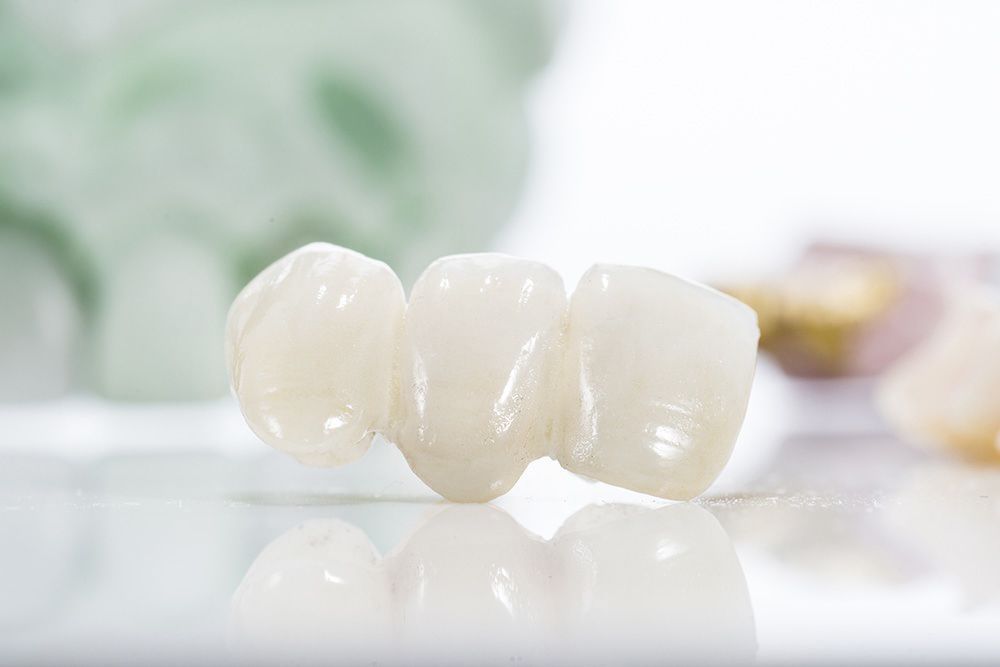
A crown covers the whole visible tooth; a bridge spans a gap. Both are made in a laboratory from an impression or digital scan, under Royal College of Dental Surgeons of Ontario standards of practice.
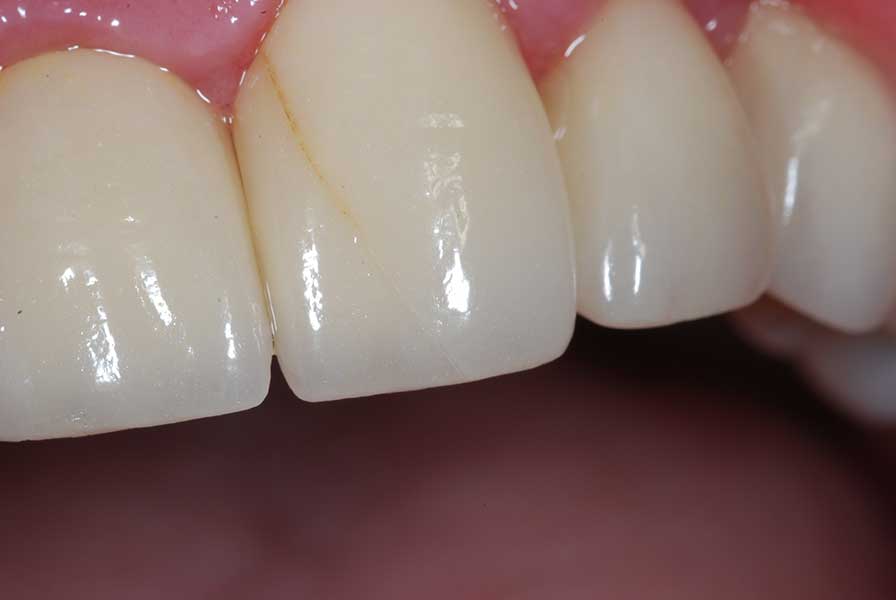
After a root canal on a back tooth, where a large old filling has cracked or the remaining walls are thin, where a cusp has fractured, or where a tooth is heavily worn from grinding. The principle is straightforward: when so little sound tooth remains that a filling would act as a wedge rather than a repair, a crown that surrounds and holds the tooth together is more predictable.
All-ceramic crowns give the best appearance and are the usual choice for front teeth. Zirconia is extremely strong and well suited to molars. Porcelain fused to metal is a long-established compromise, though a thin dark line can eventually show at the gum. Gold remains exceptionally durable and kind to opposing teeth, and is still an excellent choice where appearance matters less. There is no single best material — the right dental crowns depend on which tooth, how much space there is, and how heavily you bite.
Typically two visits. At the first the tooth is numbed and shaped, a scan or impression is taken, and a temporary crown is fitted. At the second, usually two to three weeks later, the temporary is removed and the permanent crown checked for fit, bite and appearance before being cemented. Some practices offer same-day crowns milled on site, which suits straightforward cases.
A conventional bridge crowns the teeth either side of a gap and joins a replacement tooth between them. It is fixed, comfortable and does not need removing — but it requires preparing two healthy teeth. For that reason an implant is often preferable where the neighbouring teeth are sound, since it leaves them untouched. A denture is the removable alternative and the least invasive. Each has a place; the decision depends on the condition of the adjacent teeth, the bone available and your budget.
Well-made dental crowns commonly serve for well over a decade, and many last far longer. What shortens their life is decay at the margin where crown meets tooth, and fracture from grinding. Interdental cleaning around the margin is essential, and a night guard is worth discussing if you grind. Bridges need particular attention underneath the span, usually with floss threaders or interdental brushes.
Fees reference the Ontario Dental Association suggested guide and depend on the material and the number of units in a bridge. Ask for a written estimate with procedure codes and a predetermination from your insurer, and check the Canadian Dental Care Plan if you are uninsured. The Canadian Dental Association provides further reading. See our full services list or book an appointment.
A porcelain or ceramic crown typically costs about $1,000 to $1,800, and a three-unit bridge about $2,500 to $5,000. Crowns and bridges are covered in part by most insurance plans and by the Canadian Dental Care Plan when they are needed to restore a damaged or missing tooth.
When a tooth is cracked, heavily filled, worn down or has had a root canal, a crown protects it and restores its shape and strength.
Typically 10 to 15 years or longer with good oral hygiene and regular check-ups.
Usually two: one to prepare the tooth and take impressions, and one to cement the final crown about two weeks later.
A bridge is anchored to the neighbouring teeth; an implant is placed in the jawbone and does not involve the adjacent teeth. We help you choose.
Crowns are covered under the Canadian Dental Care Plan in some circumstances with preauthorization. We handle the paperwork for you.